




The tariff landscape remains volatile as we approach 2026, with the average US tariff rate currently at 16.8% as of November 2025—down from a peak of 28% in April but still the highest since 1935. Through November, the U.S. government has collected $258 billion in tariff revenue in 2025, compared to $90 billion collected in all of 2024.
Recent developments signal both escalation and negotiation. In December, the administration announced a landmark pharmaceuticals deal with the UK, eliminating tariffs on British pharmaceutical imports in exchange for increased spending on US medicines. South Korea successfully negotiated a tariff reduction to 15% retroactive to November 1. Meanwhile, Trump has floated potential withdrawal from USMCA and proposed $2,000 'tariff dividend' checks for Americans in 2026, though economists question whether tariff revenues can support such payments.
For procurement teams, this volatility makes proactive tariff management critical heading into 2026. Industry data shows 91% of procurement leaders have adjusted their sourcing strategies due to tariff uncertainty, with 71% actively increasing domestic and nearshore supplier options."
Top tools for tariff management and response
Managing tariffs effectively requires a combination of data-driven insights, forecasting capabilities, and compliance tools to minimize risk and control costs. Here are some of the most useful tools for navigating tariff challenges.
1. Spend Analytics Software
Spend analytics platforms enable you to quickly understand and quantify the impact tariffs have on your spend profile. Rather than scrambling after tariffs hit, you can proactively assess vulnerabilities, forecast future impacts, and identify alternatives before they become urgent issues.
Suplari is a procurement intelligence solution that helps businesses modernize procurement operations using AI. Suplari provides actionable intelligence to manage suppliers, deliver savings and manage compliance beyond the limits of traditional spend analytics. Suplari’s unique AI data management foundation empowers enterprise businesses to modernize procurement operating models with reliable, AI-ready data.
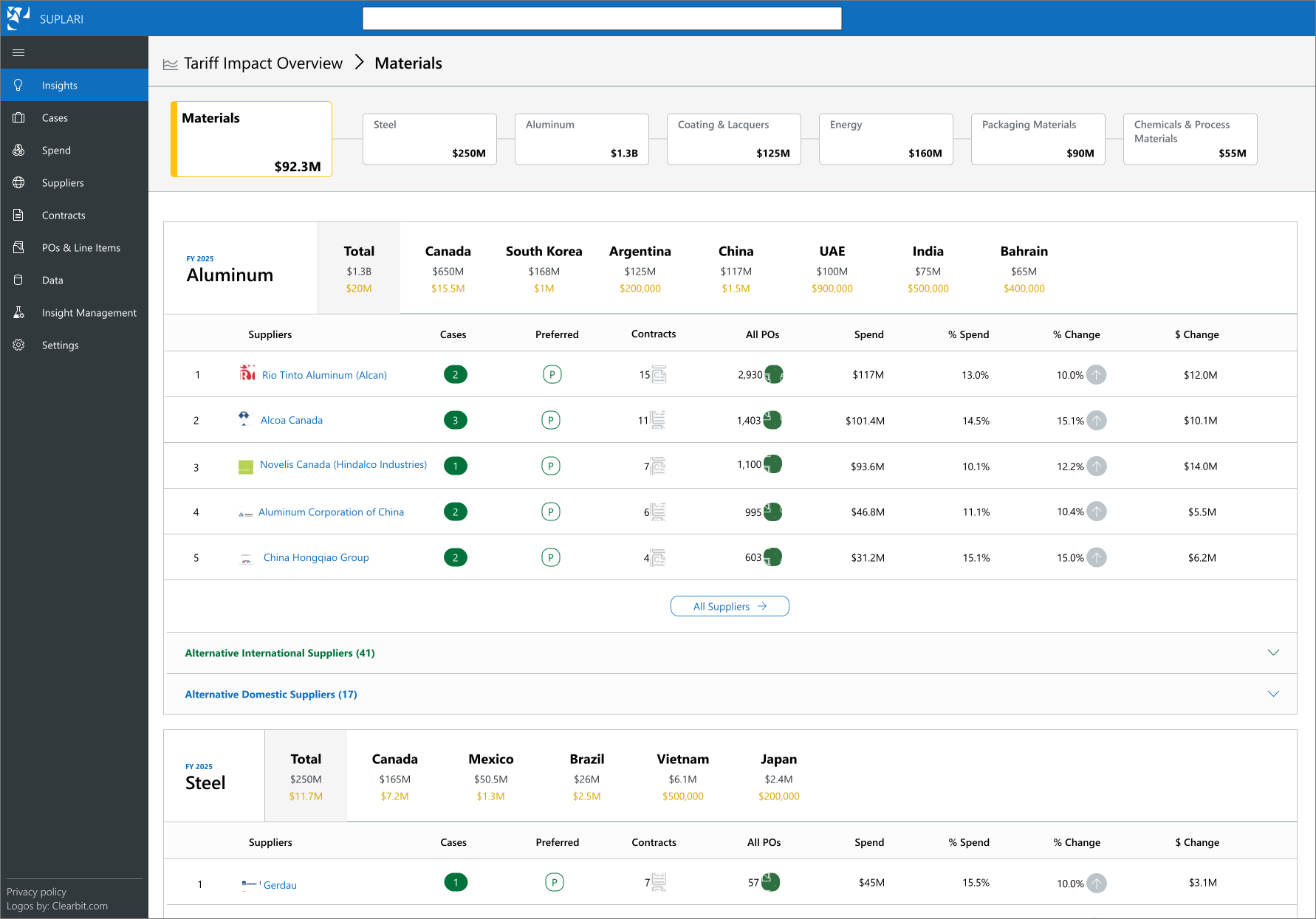
With automated spend analytics, you gain detailed visibility into your spend patterns, allowing you to pinpoint exactly which suppliers, goods, and categories are most at risk from tariffs. Instead of broad-brush estimates or intuition-based reactions, you leverage data-driven insights to inform your strategic decisions and safeguard your supply chain.
How Suplari makes the difference with AI
Suplari’s AI-powered spend analytics platform is designed specifically to help you manage tariff uncertainty effectively. By combining real-time data, advanced predictive analytics, and intuitive visualizations, Suplari gives you a clear, actionable view of tariff-related risks and opportunities.
Suplari’s predictive analytics capabilities are designed precisely for this purpose. Instead of waiting for tariffs to hit your supply chain, you can forecast potential impacts in advance. With accurate forecasting and collaborative planning features, you're empowered to make strategic sourcing decisions proactively, rather than simply reacting when tariffs are imposed.
A closer look at Suplari’s Tariff Impact Overview
Suplari’s Tariff Impact Overview consolidates procurement data into a centralized view, making it easy to assess tariff risks. The dashboard provides you updated data on:
- Spend by source country: A visual representation of your global supplier base, highlighting where your tariff-exposed spend is concentrated. This helps you quickly identify which regions and suppliers are affected.
- Spend by category: A breakdown of how tariffs impact different spend categories, such as materials, IT, and facilities. This enables you to prioritize mitigation strategies based on category-level risk.
- Supplier-specific insights: A detailed list of affected suppliers, including the total spend and estimated tariff cost per supplier. This helps you decide whether to renegotiate terms, shift to alternative sources, or absorb the increased costs.
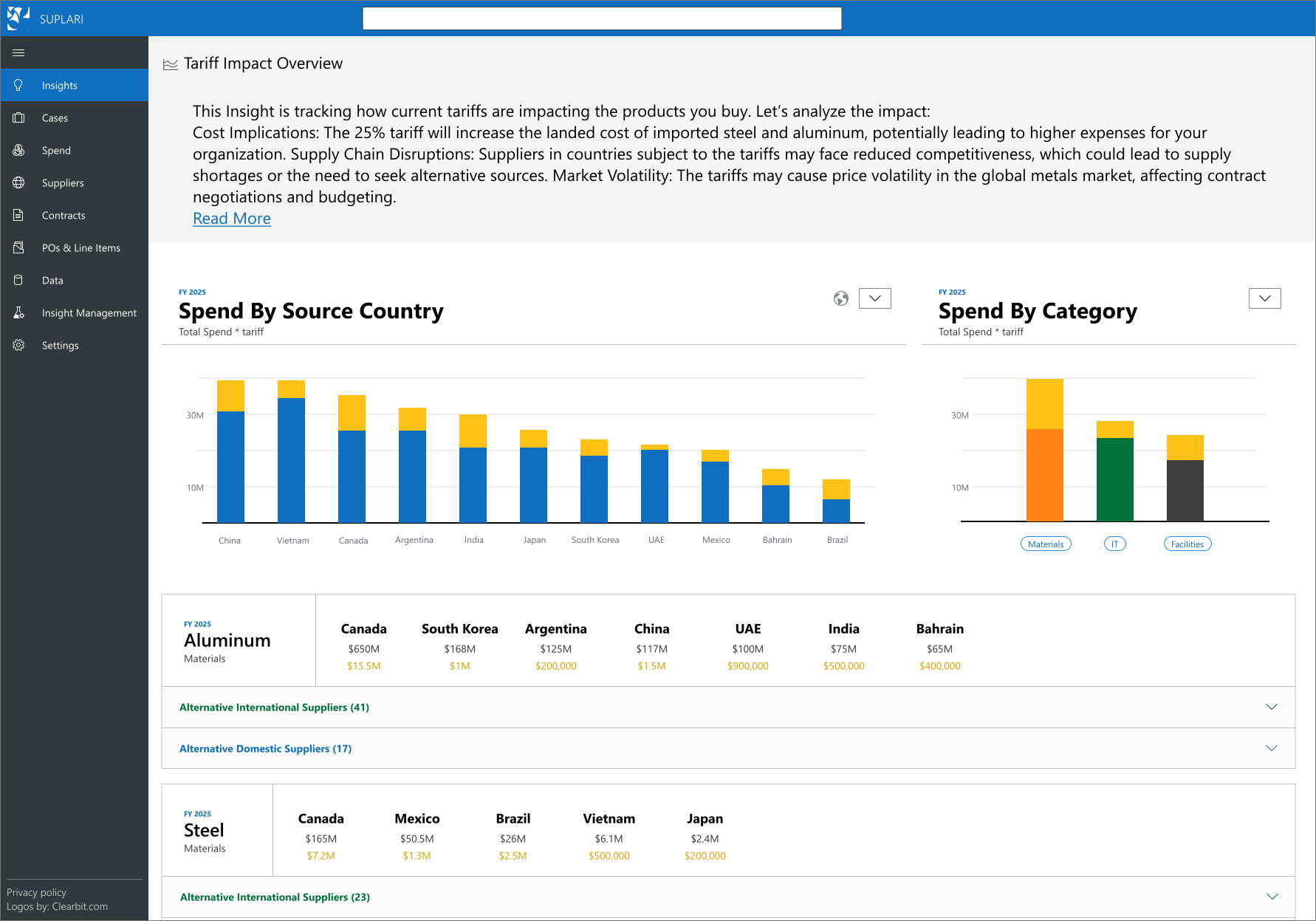
The screenshot above highlights a scenario where tariffs are impacting aluminum and steel imports to the United States. Key takeaways from this insight include:
- Aluminum tariffs: The dashboard shows that Canada, South Korea, and Argentina are major sources of aluminum for the company. With a 25% tariff applied, the increased landed cost could significantly impact procurement budgets.
- Steel tariffs: The company also sources steel from Canada, Mexico, Brazil, Vietnam, and Japan. By analyzing the data on a country and supplier basis, you can assess the financial impact and explore alternative international and domestic suppliers that might offer more cost-effective options.
With this level of visibility, you can make informed decisions—whether that means renegotiating contracts with existing suppliers, diversifying sourcing locations, or shifting procurement strategies to mitigate costs.
Finding alternative suppliers faster
Suplari doesn’t just show you the risks—it helps you take action. With the Alternative Supplier Recommendations feature, you can quickly identify potential vendors who offer the same materials but aren’t subject to the same tariff constraints. This speeds up the decision-making process and prevents supply chain disruptions.
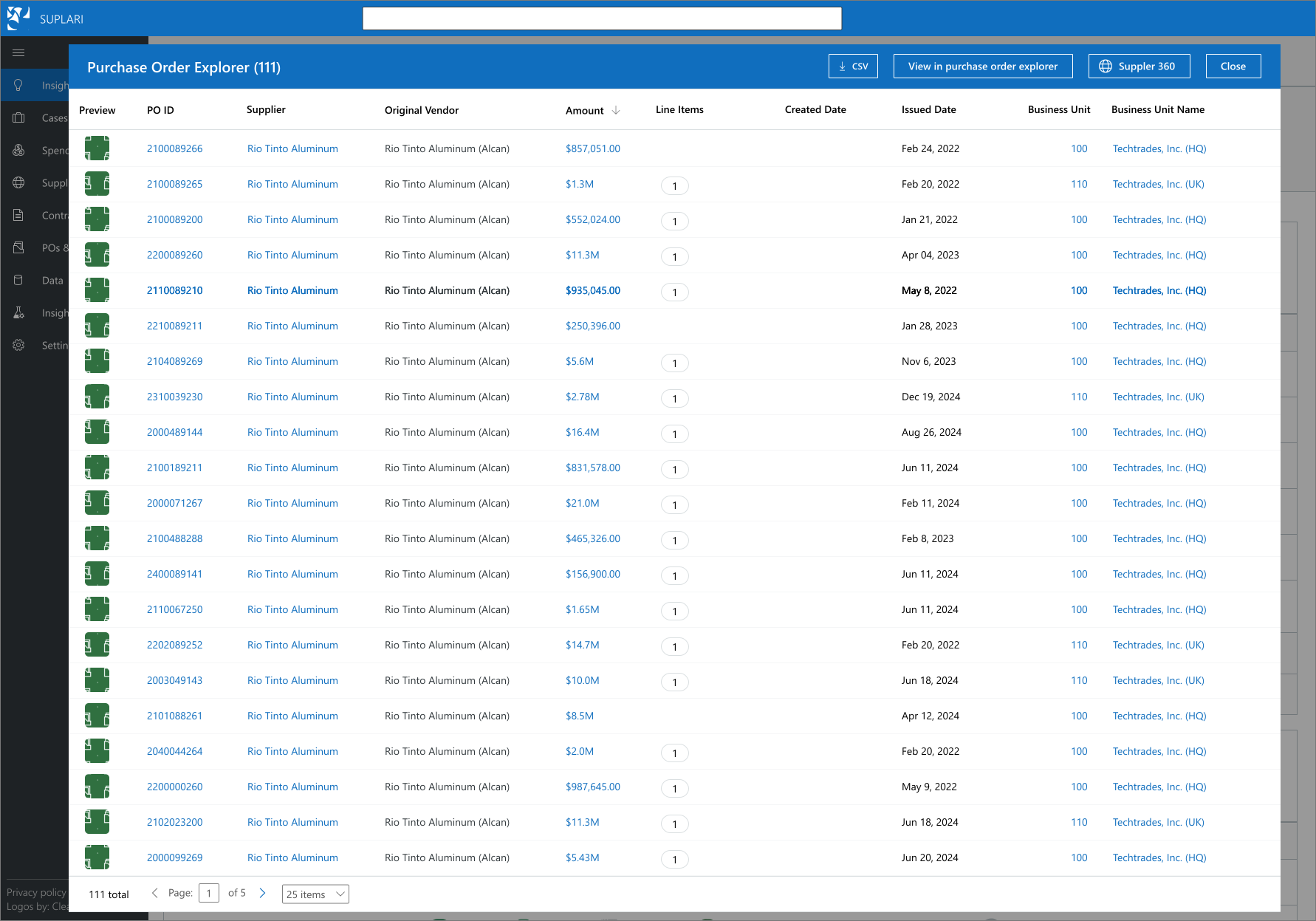
By leveraging Suplari’s automated spend analytics, you gain a proactive approach to tariff management. Instead of reacting to trade policy changes after they’ve impacted your bottom line, you have the data and insights to anticipate, plan, and respond strategically.
See an example of agentic tariff mitigation in action. Source: Suplari Spend Analytics
2. HS Code Classification Tools
Accurate HS code classification is important for determining the correct tariff rates for imported goods. These tools help procurement and compliance teams avoid costly misclassification errors that could result in unexpected duties, fines, or shipment delays. By automating classification based on Bill of Materials (BOM) data, you can anticipate tariff costs before placing orders and adjust sourcing strategies accordingly.
What they do: These tools help companies identify the correct Harmonized System (HS) codes for products in their Bill of Materials (BOM). Accurate classification is critical for determining applicable tariffs and trade regulations.
Examples: Descartes CustomsInfo, OCR Global Trade Management
3. Trade Compliance and Customs Management Software
Trade compliance platforms monitor real-time tariff updates, customs regulations, and trade policy changes across different countries. These tools help you assess how new tariffs will impact their shipments and ensure you comply with changing trade laws. Automated alerts allow you to proactively adjust supply chain strategies, minimizing unexpected tariff expenses and reducing compliance risks.
What they do: These platforms track global tariff changes, customs regulations, and trade agreements, helping businesses stay compliant while optimizing duty payments.
Examples: E2open, SAP Global Trade Services (GTS)
4. Supply Chain Risk Management (SCRM) Platforms
SCRM tools use assess geopolitical risks, trade policy shifts, and tariff exposure across global supplier networks. By identifying high-risk suppliers or sourcing regions before tariffs take effect, you can develop contingency plans, find alternative suppliers, and restructure contracts to reduce their vulnerability to sudden trade disruptions.
What they do: These tools assess geopolitical risks, trade policy shifts, and potential tariff impacts across global supplier networks, helping businesses anticipate and mitigate supply chain disruptions.
Examples: Resilinc, Everstream Analytics
5. Supplier Information and Discovery Tools
When tariffs increase costs from certain countries, businesses need quick access to alternative suppliers in lower-tariff or tariff-free regions. These tools provide supplier databases, trade history insights, and performance ratings, helping you to shift sourcing strategies without sacrificing quality or supply chain stability. This is especially valuable for mitigating tariff-driven price hikes.
What they do: These platforms help procurement teams find tariff-free or lower-tariff suppliers by analyzing global sourcing options and providing supplier performance data.
Examples: Tealbook, ThomasNet, ImportGenius
6. Tariff Forecasting and Trade Analytics Solutions
By analyzing historical trade data, political trends, and economic indicators, these tools help businesses anticipate potential tariff changes before they happen. With predictive modeling, procurement teams can simulate "what-if" tariff scenarios, assess cost impacts, and prepare sourcing adjustments in advance. This proactive approach reduces uncertainty and allows companies to budget more accurately for future tariffs.
What they do: These tools use predictive analytics to anticipate tariff changes, assess their financial impact, and model different sourcing scenarios.
Examples: Panjiva (S&P Global), Trademo Intel
7. Automated Duty Drawback & Refund Platforms
For businesses that import and then export goods, automated duty drawback tools help recover tariff costs on eligible shipments. These platforms streamline refund claims and ensure businesses don’t overpay on duties. By integrating with procurement and customs systems, they identify opportunities for duty recovery, helping offset tariff-related cost increases.
What they do: These platforms help businesses claim tariff refunds on imported goods that are later exported, reducing unnecessary tariff costs.
Examples: Avalara, Descartes QuestaWeb
8. Landed Cost Calculation Tools
Understanding the total landed cost of goods—including tariffs, duties, shipping fees, and compliance costs—is crucial for accurate pricing and budgeting. These tools provide real-time landed cost estimates, helping procurement teams compare sourcing options based on true cost impact rather than just base price. This is critical for avoiding unexpected tariff expenses and ensuring profitable procurement decisions.
What they do: These solutions calculate the true total cost of imported goods, factoring in tariffs, duties, shipping, and compliance fees to support better procurement decisions.
Examples: SimplyDuty, BuyCo
9. Import/Export Data & Trade Intelligence Platforms
These platforms provide real-time trade data, customs filings, and import/export trends to help businesses track supply chain disruptions and tariff changes. By analyzing this data, you can forecast potential tariff risks, monitor price trends, and adjust sourcing decisions before tariffs significantly impact costs. This intelligence helps companies stay ahead of shifting trade policies.
- What they do: These platforms provide detailed insights into trade flows, tariff rates, and supply chain disruptions based on real-time customs and import/export data.
- Examples: ImportYeti, Descartes Datamyne
10. AI Procurement Agents
AI procurement agents combine generative AI with domain expertise to empower procurement teams with intelligent automation and analysis capabilities. These platforms understand your specific procurement data and processes, enabling natural language interactions to analyze complex scenarios, automate routine tasks, and surface strategic insights without requiring technical expertise.
AI procurement agents represent the fastest-growing category in procurement technology heading into 2026. Industry research shows 100% of procurement leaders have implemented some level of AI, with 72% rating their maturity as "moderate" and 6% achieving advanced implementation with measurable results across procurement functions.
What they do: These AI-powered agents provide intelligent assistance for procurement activities, from "what-if" scenario analysis and strategic planning to automated data categorization and cleanup. They can simulate tariff impacts, analyze spend patterns, and recommend specific actions based on your organization's unique data and business objectives.
Examples: Suplari AI Procurement Agent
How it helps with tariff management: An AI procurement agent can instantly analyze tariff exposure across your spend portfolio, simulate various tariff scenarios, and recommend specific mitigation strategies. For example, you could ask "What is my exposure to the new 10% tariff on electronics from China?" and receive detailed analysis with actionable recommendations—all through natural language conversation rather than complex dashboard navigation.
Understanding the 2025-2026 tariff environment: What procurement teams need to know
As we close out 2025 and plan for 2026, procurement professionals face a fundamentally different trade environment than existed 12 months ago. Here's what defines the current landscape:
Tariff volatility has become the norm
Tariff rates have fluctuated dramatically throughout 2025, starting at 2.4% in January, peaking at 28% in April, and settling around 16.8% by November. This represents the highest sustained tariff environment since the 1930s. More importantly, rates can change with minimal notice—sometimes announced with same-week implementation.
Trade deals are reshaping rates weekly
The administration has announced framework agreements with nine trading partners including the UK, EU, Japan, South Korea, Vietnam, and several Latin American countries. Each deal modifies tariff rates for specific products or countries. For example, qualifying agricultural products were exempted from reciprocal tariffs in November, while South Korea's rate dropped from 25% to 15% in a single announcement.
Import behavior is shifting rapidly
Companies have dramatically altered sourcing patterns to avoid tariffs. China's share of US imports has dropped from 13-14% to around 9%, while Vietnam's share jumped from 4% to 6%. Imports from Canada and Mexico increasingly qualify for USMCA exemptions—65% of Canadian imports and 57% of Mexican imports now enter tariff-free, far higher than the 38% and 49% originally estimated.
Revenue targets are missing projections
Despite high tariff rates, actual revenue collections are running approximately $100 billion below Treasury projections. The effective average tariff rate of 12-13% falls short of the 18-20% expected, primarily because businesses are successfully routing trade through lower-tariff countries and leveraging trade agreement exemptions.
Legal uncertainty clouds the future
Multiple federal courts have ruled that IEEPA tariffs exceed presidential authority. While tariffs remain in place pending Supreme Court review, a ruling against the administration could trigger billions in refunds and slash the average tariff rate to pre-2025 levels. Major companies including Costco have already filed claims for tariff refunds.
What this means for 2026 planning and budgeting
Procurement teams can no longer treat tariffs as a quarterly planning variable. Effective tariff management now requires:
• Real-time visibility into tariff exposure across your entire supplier base
• Ability to model "what-if" scenarios as rates change
• Pre-vetted alternative suppliers in multiple regions
• Continuous monitoring of trade deal negotiations
• Automated alerting when new tariffs affect your categories
The tools and strategies outlined above help procurement teams move from reactive crisis management to proactive tariff resilience
Bottom line: take a proactive approach to tariff management
Since January 2025, we've seen unprecedented tariff volatility with US tariff revenue exceeding $30 billion per month compared to under $10 billion per month in 2024. Tariffs are no longer just an operational challenge. They are a strategic disruption that can impact costs, supplier relationships, and overall profitability. Relying on outdated methods leaves your organization vulnerable to sudden tariff changes, supply chain disruptions, and missed cost-saving opportunities.
By leveraging AI-powered spend analytics, trade compliance tools, supply chain risk management platforms, and predictive analytics, you can anticipate tariff impacts, optimize sourcing decisions, and protect your bottom line. Tools like Suplari, Resilinc, and HS classification software give you visibility and control to move from reactive to proactive tariff management, ensuring agility in an unpredictable global trade environment.
Now is the time to invest in data-driven solutions that help you forecast, manage, and respond to tariffs with confidence. Schedule a demo with Suplari today.
Tariff management FAQs
How can procurement teams respond to rapid tariff changes?
Suplari's Tariff Impact Overview provides immediate visibility into affected spend by country, category, and supplier. The AI Procurement Agent simulates tariff scenarios in real-time, allowing teams to model alternative sourcing strategies and quantify financial impacts before making procurement decisions. This enables procurement teams to move from reactive crisis management to proactive strategic planning.
What makes spend analytics software essential for managing tariff volatility?
Without data-driven insights, managing tariff exposure across global supply chains becomes impossible. Suplari's spend analytics platform automatically categorizes purchases, tracks tariff-exposed suppliers, and provides predictive forecasting to help procurement teams stay ahead of policy changes rather than scrambling to react after costs increase. Comprehensive spend visibility is the foundation of effective tariff risk management.
How can procurement teams implement tariff mitigation strategies quickly?
Suplari's Alternative Supplier Recommendations feature instantly identifies vendors offering similar materials from lower-tariff or tariff-free regions. Combined with the AI Procurement Agent's natural language interface, teams can ask questions like "Show me alternative suppliers for steel outside of high-tariff countries" and receive actionable recommendations within minutes—critical speed when new tariffs can be announced with minimal warning.

