









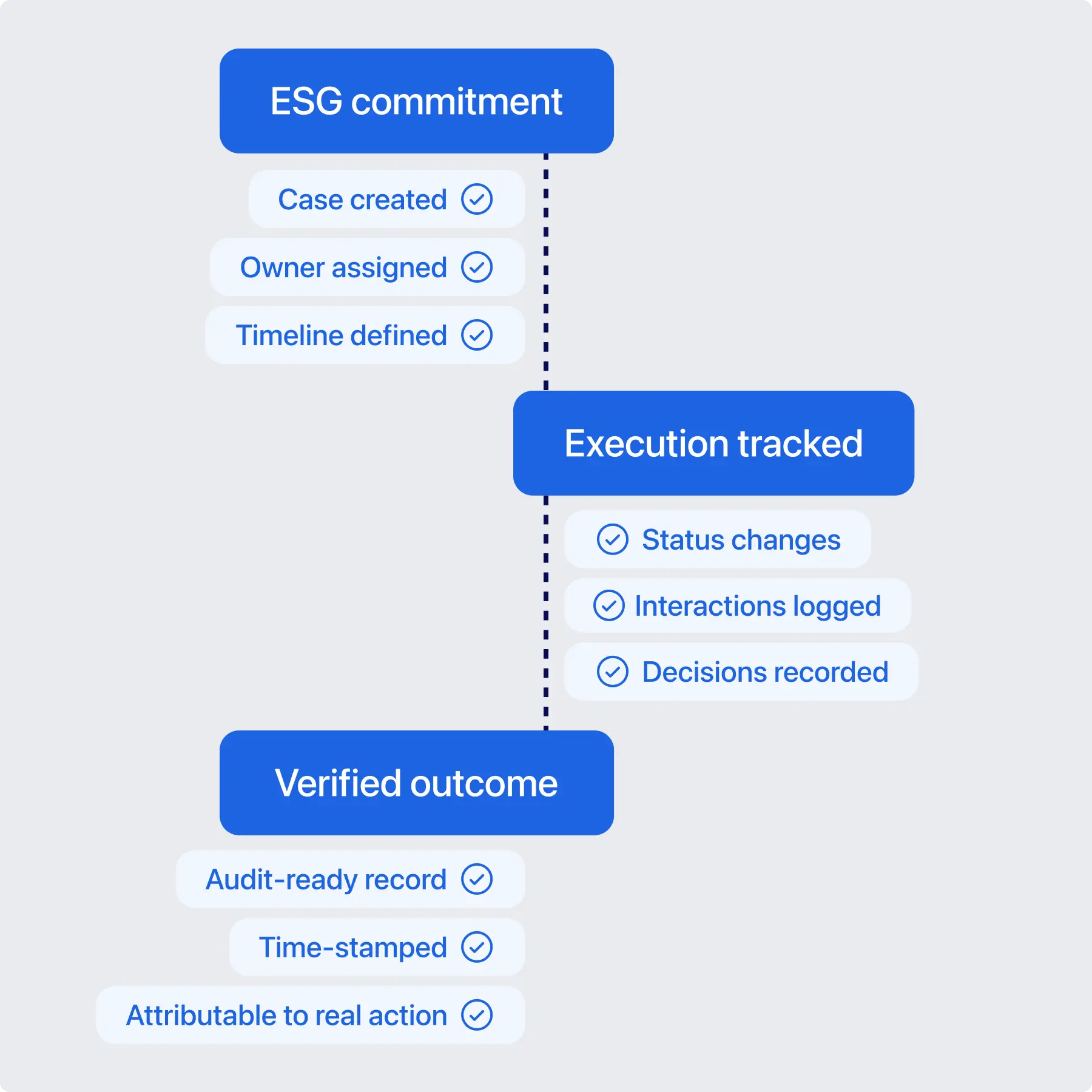
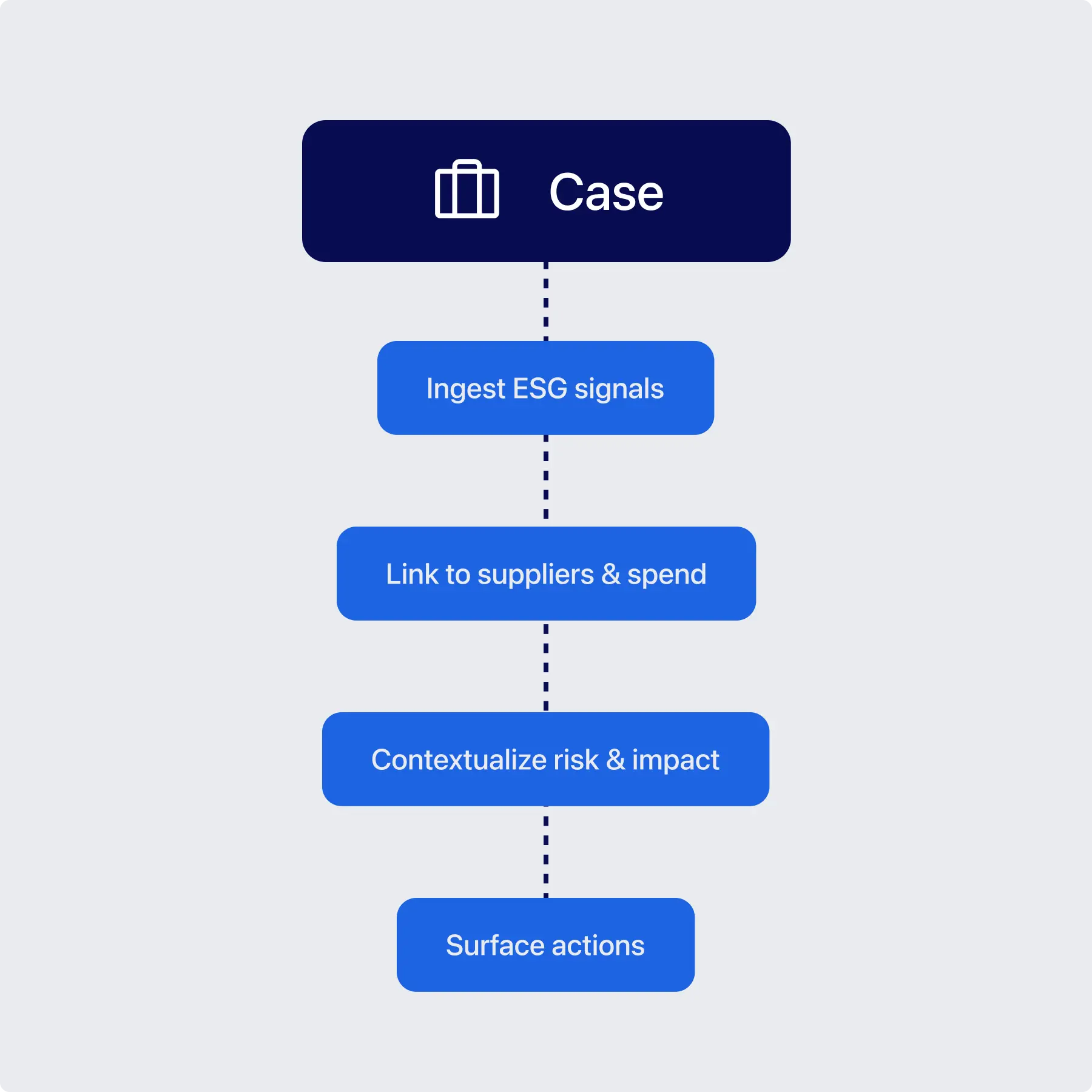












ESG intelligence software for procurement connects internal spend and supplier data with external ESG metrics — including supplier diversity certifications, carbon emissions, labor practices, and ethical sourcing ratings — to create a single source of truth for managing sustainability and compliance goals. Unlike manual spreadsheet tracking or disconnected ESG databases, procurement ESG intelligence platforms like Suplari continuously monitor performance, identify risks and opportunities, and enable coordinated action across procurement, sustainability, and finance teams. The software automatically enriches supplier data with ESG attributes, tracks progress toward corporate sustainability commitments, and produces audit-ready documentation for regulatory reporting requirements.
Supplier diversity management software automatically enriches your supplier master data with diversity certifications (WBENC, MBE, VBE, LGBTBE+, Disability:IN) from trusted certification databases, eliminating manual tracking and one-off reports. Platforms like Suplari use AI to continuously monitor diverse spend by category, cost center, and business unit, flag when spending shifts away from diverse suppliers, identify categories with low diverse representation, and recommend certified diverse alternatives for your specific spend profile. The software creates a continuously refreshed baseline that shows how diverse spend is trending month over month, enabling procurement teams to proactively manage diversity programs and demonstrate measurable progress toward corporate commitments rather than relying on quarterly manual analysis.
Yes, modern procurement intelligence platforms integrate supplier-level carbon emissions data and Scope 3 calculations with your actual spend transactions to show exactly where your procurement carbon footprint comes from. Solutions like Suplari connect spend data with supplier environmental disclosures from sources like CDP and EcoVadis, calculate emissions by category and supplier, identify carbon-intensive spending patterns, and recommend lower-emission alternatives. This gives procurement and sustainability teams unified visibility into supply chain emissions without requiring separate manual data collection or reconciliation between procurement and sustainability systems. The platform continuously monitors carbon performance alongside spend, enabling proactive emission reduction initiatives rather than reactive annual reporting.
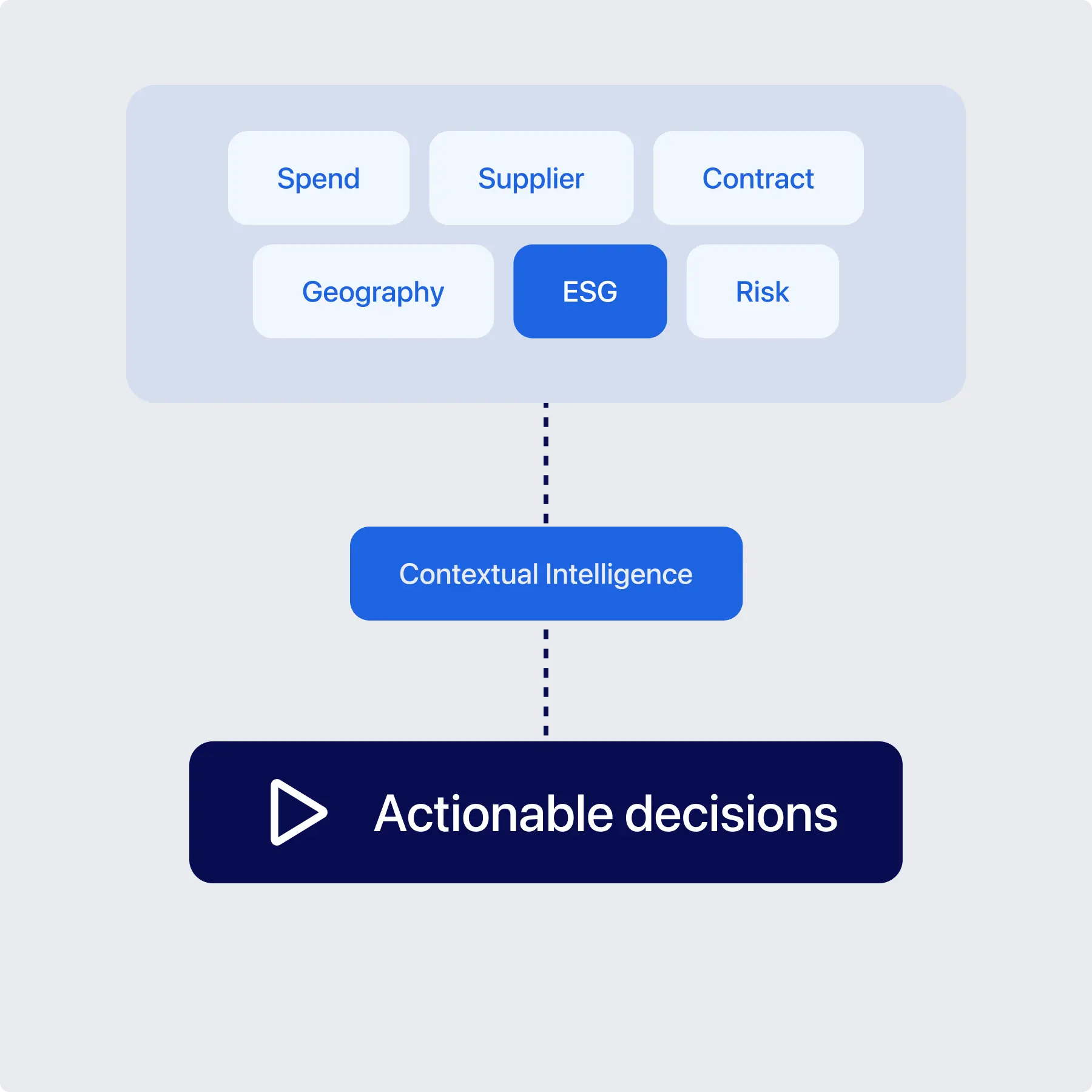
Data enables sustainable procurement by creating a unified foundation that connects what you're buying (spend), from whom (suppliers), under what terms (contracts), and with what ESG impact (diversity, carbon, labor practices, ethics). Platforms like Suplari automatically enrich this data with ESG attributes from external certification bodies and rating agencies, then apply AI to continuously monitor compliance and surface opportunities. When procurement data is unified and intelligent, teams can identify non-compliant suppliers before audits, detect ESG risks as they emerge, prioritize high-impact sustainability opportunities, track progress toward targets in real-time, and produce audit-ready reports for regulatory requirements. Without this unified, intelligent data foundation, ESG compliance remains reactive, manual, and disconnected from actual procurement decisions that drive supply chain sustainability outcomes.
ESG reporting tools focus on collecting sustainability data for external disclosure and regulatory compliance, typically used by sustainability teams for annual reports and frameworks like CDP, GRI, or SASB. Procurement ESG intelligence platforms like Suplari focus on operationalizing ESG within procurement workflows — connecting ESG data directly to sourcing decisions, supplier selection, contract management, and spend allocation to drive measurable improvement in real-time. Procurement intelligence platforms unify spend, supplier, contract, and ESG data into a continuously monitored foundation that identifies opportunities and risks as they happen, not quarterly or annually. The best approach integrates both: procurement intelligence provides the operational foundation and verified outcomes that feed into corporate ESG reporting requirements, creating alignment between procurement actions and sustainability commitments with audit-ready documentation.
Procurement intelligence transforms supplier diversity from a compliance checkbox into a strategic value driver by continuously analyzing unified spend and supplier data to identify where diverse suppliers can compete, which categories have untapped diverse supplier capacity, and where business units are underperforming against diversity targets. Platforms like Suplari use AI to recommend specific diverse alternatives for active spend, alert teams when existing diverse suppliers risk losing business, forecast diverse spend trajectory toward goals, and connect diversity opportunities to sourcing events and contract renewals. This enables procurement to proactively expand diverse supplier utilization instead of reactively reporting on it quarterly. The platform also tracks the business value diverse suppliers deliver — quality, innovation, cost competitiveness — demonstrating their strategic contribution beyond certification status and helping procurement teams build the case for intentional diverse supplier development programs.