




ChatGPT and similar generative AI tools have fundamentally changed how procurement teams approach their work. They excel at brainstorming, drafting templates, researching markets, and explaining complex concepts. But there's a critical distinction between "helpful assistance" and "reliable decision-making"—one that many procurement leaders are discovering the hard way.
This article cuts through the hype. We'll explore where ChatGPT genuinely helps procurement teams, where it falls short, and why purpose-built procurement AI tools like Suplari represent a necessary next step for organizations managing complex spend portfolios.
Where ChatGPT helps procurement teams
ChatGPT and Copilot now dominate procurement: in the 2026 Procurement Tactics × Suplari benchmark of 121 teams, 62% use ChatGPT/GPT-4 and 61% use Microsoft Copilot, while only 8% use AI that's integrated into their procurement platform. The activity is real — 47% of procurement professionals use AI every working day — but nearly 90% of that usage is general-purpose. The bottleneck isn't enthusiasm; it's the connection between AI and procurement data.
Let me be clear about the value of generative AI tools like ChatGPT, Claude and Gemini. They are already widely used in business today. 94% of procurement teams use generative AI tools every week.
You can use it effectively for several procurement tasks:
Content creation and communication support
ChatGPT excels at drafting documents. You can generate RFP templates, vendor communications, and procurement policy drafts quickly. It helps create training materials and process documentation. The tool works well for meeting agendas and follow-up emails.
The key is treating it as a writing assistant. You provide the strategic direction, and ChatGPT handles the initial draft. This saves hours on document creation.
Research and market intelligence gathering
You can leverage ChatGPT for preliminary market research. It synthesizes publicly available information about suppliers, industry trends, and competitive intelligence. The tool helps create risk assessment frameworks and basic category profiles.
For category research, ChatGPT provides a solid starting point, but is limited by access to quality spend data. It can outline best practices for procurement strategies and suggest evaluation criteria. It can also analyze a limited spend cube or procurement data spreadsheet shared as a .csv. But be careful of hallucinations, or outputs based on incomplete information.
Process optimization brainstorming
ChatGPT serves as an effective brainstorming partner for any member of your team. You can explore cost reduction opportunities, workflow improvements, and vendor evaluation approaches. It suggests methodologies and frameworks you might not have considered.
The tool helps you think through complex procurement challenges. It offers different perspectives on sourcing strategies and process improvements. However, it does not replace the unique knowledge and experience of your team.
Common ChatGPT prompts for procurement teams
These are practical, tested prompts procurement teams use regularly. Each includes a note on what ChatGPT does well and where it has limitations.
Spend analysis prompts
"Analyze this spend data and identify the top 10 categories by total spend"
- What works: ChatGPT can work with small, well-structured datasets and identify spending patterns.
- Limitation: Works only with data you paste directly (few hundred rows maximum). Cannot connect to your ERP system, handle inconsistent category codes, or flag duplicate records. For enterprise-grade spend analysis across millions of transactions, Suplari's spend analytics platform connects directly to your data and delivers cleansed insights in weeks, not months.
"Create a spend cube template for [category] with columns for supplier, amount, department, and contract status"
- What works: Generates a well-structured spreadsheet template you can immediately use.
- Limitation: Creates an empty shell. Doesn't populate with your actual data or validate against your historical contracts. Requires significant manual work to implement.
"What are the typical benchmark prices for [product/service] in [industry]?"
- What works: Provides context on market-rate ranges and factors affecting pricing in your industry.
- Limitation: Lacks access to your company's actual negotiated rates, supplier agreements, and regional variations. Cannot account for volume discounts or your specific business requirements. Suplari's price intelligence solution benchmarks your actual spend against market data and your contracts.
Sourcing & supplier management prompts
"Draft an RFP for [service] including evaluation criteria weighted by importance"
- What works: Creates a professional RFP template with structured sections and scoring guidance.
- Limitation: Doesn't reflect your company's specific requirements, risk profile, or compliance needs. Requires significant customization. Template quality is generic—not tailored to your industry or past supplier performance data.
"Create a supplier scorecard template for evaluating [type] vendors"
- What works: Generates a balanced scorecard with relevant evaluation categories and weightings.
- Limitation: Doesn't incorporate your historical supplier performance data or account for past contract outcomes. Cannot dynamically weight criteria based on which factors actually drove success in your organization.
"Write a supplier risk assessment framework for [category]"
- What works: Outlines key risk categories relevant to your spend area (financial stability, geographic concentration, compliance, quality).
- Limitation: Generic framework. Doesn't assess your actual suppliers against real risk data. Cannot prioritize which risks have historically impacted your category or your specific business. Suplari's supplier intelligence platform profiles actual suppliers and flags emerging risks using real-time data.
"Summarize the key risks of single-sourcing [critical component]"
- What works: Articulates common supply chain vulnerabilities and business continuity risks associated with single sources.
- Limitation: Theoretical risks. Doesn't account for your actual supplier's stability, your contract terms, or your ability to diversify. Needs grounding in real data to be actionable.
Contract and negotiation prompts
"Review this contract clause and identify potential risks for the buyer" (paste clause)
- What works: Can spot obvious gaps, identify non-standard terms, and flag risky language patterns.
- Limitation: Lacks context about your company's risk tolerance, industry standards, or what you've negotiated in similar agreements. Cannot reference your contract database or past precedents. May miss domain-specific risks that matter to procurement teams. Suplari's contract intelligence platform automatically extracts key terms from your contracts, compares them against your standards, and flags deviations.
"Draft negotiation talking points for a contract renewal with [supplier type] focusing on [priorities]"
- What works: Creates a structured negotiation framework with logical argument progression.
- Limitation: Doesn't reference your historical terms with this supplier, their pricing trajectory, or market benchmarks. Lacks competitive context or leverage assessment. Requires manual research to ground the negotiation strategy in real data.
"Create a contract compliance checklist for [category]"
- What works: Generates a comprehensive checklist of common compliance requirements and contract elements.
- Limitation: Generic checklist. Doesn't reflect your company's specific compliance requirements, audit findings, or regulatory environment. Requires customization and may miss category-specific compliance risks.
Process and policy prompts
"Draft a procurement policy for purchases under $10,000"
- What works: Creates a clear, professional policy document with standard sections and approval workflows.
- Limitation: Generic template. Doesn't reflect your company culture, risk profile, approval structure, or audit requirements. Needs significant customization to integrate with your actual business processes.
"Create a purchase requisition approval workflow for a company with [X] employees"
- What works: Designs a tiered approval structure with reasonable spending thresholds.
- Limitation: One-size-fits-all approach. Doesn't account for departmental variations, geographical differences, or your company's actual organizational structure. Requires mapping against your real reporting lines and spend patterns.
"Write training materials explaining our preferred supplier program to department managers"
- What works: Creates clear, manager-friendly explanations of program benefits and processes.
- Limitation: Generic content. Doesn't incorporate your specific supplier list, the actual benefits you negotiated, or the cost savings your program has delivered. Requires substantial customization to be credible with your stakeholders.
Strategy and reporting prompts
"Create a quarterly procurement performance report template with KPIs for [focus areas]"
- What works: Structures a professional report with logical KPI categories and visualization recommendations.
- Limitation: Empty template. Cannot populate with your actual performance data, benchmark against prior quarters, or extract metrics from your ERP system. Requires manual data gathering and calculation. Suplari's platform integrates with your data to automate performance reporting and savings tracking.
"Outline a category strategy for [category] including market analysis, supplier landscape, and savings opportunities"
- What works: Provides a structured framework for thinking through category strategy components.
- Limitation: Lacks your actual spend data, supplier performance history, contract details, and market-specific intelligence. Cannot prioritize which initiatives will deliver the greatest ROI for your organization. Requires deep research and customization to become actionable. Purpose-built procurement AI like Suplari delivers data-driven category strategies grounded in your specific business context.
The critical limitations that constrain ChatGPT's value
Here's where ChatGPT falls short for serious procurement operations. These limitations aren't just minor inconveniences. They're often fundamental barriers to real business impact.
No access to your actual procurement data
ChatGPT cannot natively connect to your ERP systems, contracts, or purchase orders. It has no visibility into your spend analytics, supplier performance, or contract terms. The tool mostly operates on public information and general knowledge, missing the context of your specific supplier relationships and organizational dynamics.
Without your data, ChatGPT provides generic advice that may not apply to your situation. It cannot identify real cost savings opportunities or analyze your actual procurement performance.
Accuracy and reliability concerns
ChatGPT suffers from "hallucinations," often generating confident-sounding but incorrect information. This creates serious risks for financial calculations and analysis. The tool uses training data that may be outdated, missing current market conditions and pricing.
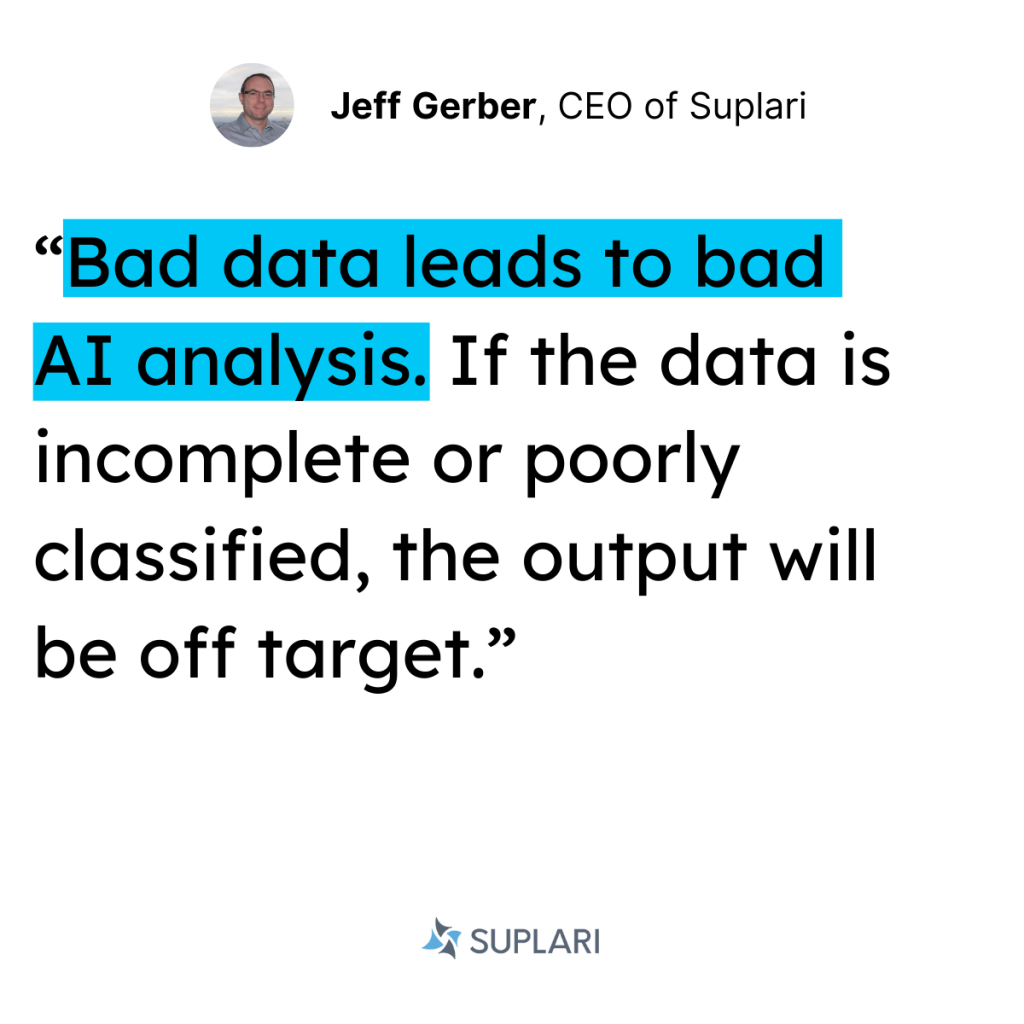
As one procurement leader noted, "Our AI analysis is only as reliable as the data we provide. When the data is incomplete or poorly classified, the recommendations will be off target." With ChatGPT, you cannot provide your proprietary data safely.
Security and confidentiality issues
ChatGPT cannot handle sensitive procurement data securely. Entering confidential supplier information, contract details, or strategic plans into a public AI model creates unacceptable risks. You should never share sensitive supplier information, confidential contract details, or proprietary business data with a public AI model.
This limitation eliminates most high-value procurement use cases where real data analysis drives meaningful results.
The governance reality in 2026: according to recent benchmarks ,83% of procurement organizations have no enforced AI governance policy, yet teams are actively using AI on confidential pricing, competitive bids, and contract terms. Only 17% have a policy that's actively enforced. Of those without one, 41% have no plans to create one. (Source: AI Readiness in Procurement 2026.)
Limited analytical depth
ChatGPT cannot perform complex spend analysis across categories. It has no ability to identify savings opportunities from actual data or conduct contract-to-spend correlation analysis. The insights remain superficial without procurement-specific intelligence.
You need deep data integration and domain expertise for meaningful procurement analytics. ChatGPT provides neither.
Why purpose-built procurement AI solutions excel
The fundamental difference between ChatGPT and vertical procurement AI comes down to one word: autonomy. While ChatGPT assists with tasks, purpose-built solutions like Suplari’s AI Procurement Agent actually execute procurement workflows.
Deep data integration and autonomous execution
Purpose-built solutions operate with direct connection to spend data, contracts, and purchase orders enabling real-time analysis of supplier performance and market conditions. More importantly, they don't just analyze, they act.
Imagine having an AI agent that monitors your supplier performance overnight, automatically initiates corrective actions when parameters are exceeded, and sends you a summary of decisions made rather than requesting your input on routine matters.
Example of what-if scenario planning with Suplari's AI Agent
Rather than humans analyzing AI insights and manually executing responses, purpose-built procurement agents can continuously monitor business conditions, identify opportunities, and take immediate action within pre-defined strategic parameters. Alternatively, you can choose to keep an expert in the loop and notify a human collaborator and enable action with the press of a button.
Domain-specific intelligence and learning
Purpose-built procurement AI understands procurement terminology, processes, and best practices. It provides industry-specific insights and benchmarking capabilities. Most critically, it learns from your organizational context and outcomes.
AI needs data to be relevant. But more than that, the AI needs to understand procurement complexity: supplier relationship dynamics, contract complexity, regulatory requirements, stakeholder relationships, and risk management.
ChatGPT lacks this domain expertise. It cannot navigate the nuanced world of procurement relationships and processes.
Persistent memory and continuous improvement
Unlike ChatGPT, which starts fresh with every conversation, Suplari’s purpose-built procurement AI agent platform maintains long-term organizational context. It builds institutional knowledge that improves over time.
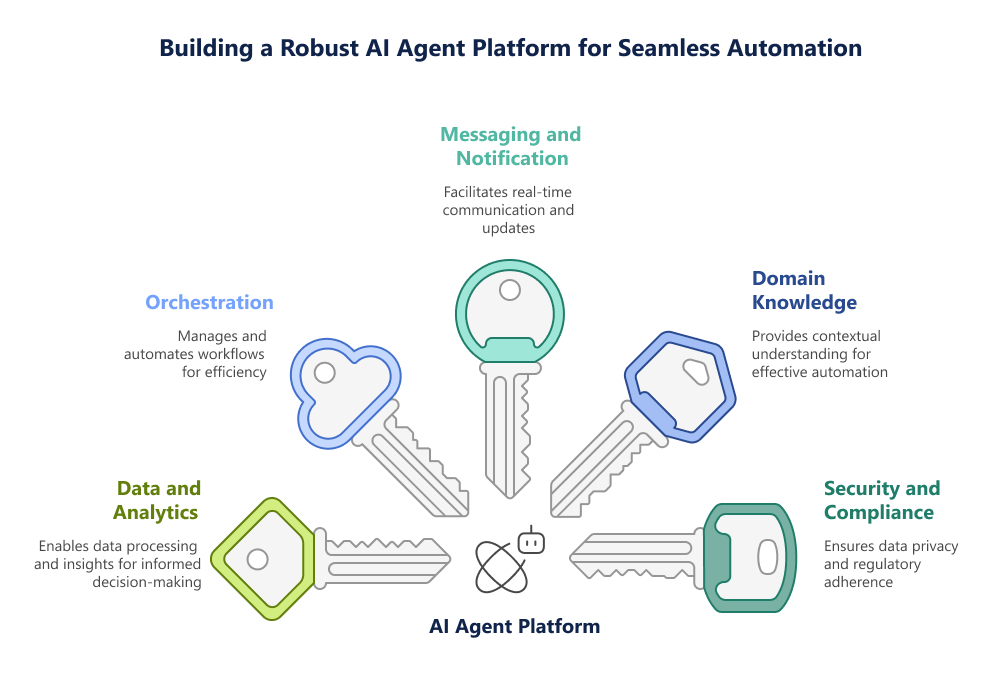
This continuous learning means every decision, outcome, and market change improves agent decision-making capability and strategic alignment. Your AI agent becomes more effective as it learns your organization's preferences and successful patterns.
Enterprise security and compliance
Purpose-built solutions like Suplari handle sensitive procurement and financial data securely. They provide audit trails and governance controls you won’t find in generalist AI solutions. They integrate with your existing security infrastructure while meeting industry regulations.
This security foundation enables the real data analysis that drives meaningful procurement improvements.
Real-world applications where vertical solutions shine
The difference becomes clear when you examine actual implementations of purpose-built AI procurement tools.
Contract intelligence with autonomous action
Consider contract analytics. ChatGPT can review contract language you paste into it, but it cannot connect contract terms to actual spend patterns. It cannot identify when you're paying outside contracted rates or flag compliance violations in real-time.
A purpose-built solution monitors contracts continuously, compares terms to actual transactions, and automatically flags deviations or opportunities for renegotiation. This autonomous monitoring provides ongoing value rather than one-time assistance.
Unstructured data extraction and action
Purpose-built solutions can leverage unstructured data within purchase orders and invoices to gain more visibility into line item meanings and potential opportunities. They extract insights from documents automatically and take action based on findings.
ChatGPT can help you understand a document you upload, but it cannot systematically process thousands of invoices to identify patterns and automatically respond to issues.
The strategic imperative for procurement leaders
Industry research shows that 90% of CPOs now considering leveraging or building procurement-focused AI agents. But the most successful organizations aren't just using AI—they're implementing autonomous AI that transforms their operating model.
Over the past 24 months we’ve helped multiple Forbes Global 2000 companies craft their AI procurement strategy. We firmly believe AI will augment rather than replace human expertise, with the greatest near-term value in automated data analysis, process automation, and strategic decision support.
The question isn't whether to use AI in procurement. The question is whether you'll settle for generative AI tools for assistance or pursue autonomous procurement execution that delivers competitive advantage.
Moving from tactical to strategic
Paula Glickenhaus, CPO of Bristol Myers Squibb, recently captured this transformation: "It's helping procurement to have a better positioning in companies as a gatherer of data and then being able to analyze this data and provide this analysis to senior leaders so that they can make the right decisions."
With AI handling the complex and repetitive tasks of data wrangling strategic teams focus on strategic work. Operational bandwidth freed through autonomous execution enables procurement leaders to drive innovation, supplier partnerships, and business transformation initiatives that create measurable competitive advantage.
The competitive advantage of autonomous execution
Organizations that deploy autonomous procurement AI gain significant advantages:
- 24/7 operations: Procurement decisions happen around the clock, not just during business hours
- Real-time market response: Supply chain disruptions and opportunities trigger immediate action or what-if scenarios.
- Continuous optimization: AI learns from every decision to improve future performance
- Strategic capacity: Human talent focuses on high-value initiatives rather than operational tasks
As one Fortune 500 manufacturing company discovered, “Suplari’s AI agent gives us answers in seconds to questions our team of data analysts couldn’t answer in weeks.”
Making the right choice for your organization
ChatGPT has its place in your toolkit. Use it for document drafting, preliminary research, and brainstorming. But recognize its limitations and plan accordingly.
For transformational procurement impact, you need autonomous AI that:
- Connects to your actual procurement data
- Makes decisions within your strategic parameters
- Executes actions without human intervention
- Learns continuously from your organizational context
- Operates securely with enterprise-grade controls
The organizations that thrive in the next five years will be those that move beyond AI assistance to AI autonomy. They'll deploy purpose-built solutions that don't just analyze procurement data—they act on it, learn from it, and continuously optimize business outcomes while procurement leaders focus on strategic value creation.
Your choice isn't just about which AI tool to use. It's about whether you'll remain in the era of human-dependent procurement or advance to autonomous procurement execution that delivers measurable competitive advantage.
The technology exists today. The question is whether you'll use it to transform your procurement organization or settle for incremental improvements to the status quo. Book a demo to get started.

