




Procurement Key Performance Indicators (KPIs) are quantifiable metrics used to measure the efficiency and effectiveness of purchasing, sourcing, and supplier management. Top procurement KPIs for 2026 include cost savings, maverick spend, spend under management, supplier defect rates, PO cycle time, and supplier risk scores -- all designed to drive efficiency, reduce risk, and unlock strategic value across the supply chain.
If your procurement team is still relying on gut instinct or outdated spreadsheets to measure success, you are flying blind. The most effective procurement organizations in 2026 use a disciplined set of KPIs to connect every purchase order, supplier relationship, and contract to measurable business outcomes. At Suplari, we have seen firsthand how the right KPIs -- tracked with the right technology -- transform procurement from a cost center into a strategic growth driver.
This guide covers the key procurement KPIs every team should track, how to organize them by category, and practical tips for turning metrics into action.
The importance of measuable procurement
The business management guru Peter Drucker famously once said, “what gets measured gets managed.” Before you can start to explore and define what to measure, you’ll need to consolidate and harmonize your procurement spend data in a way that you can do your analysis.
For example, a company might already track overall supplier spending in its Enterprise Resource Planning (ERP) system, but that doesn’t reveal if purchases are being made off-contract or if spend under management is increasing. Without visibility into these details, you can’t take corrective actions to optimize their procurement strategies.
Spend visibility is not always an easy challenge to solve. Many procurement teams are limited by fragmented data sources, which prevent them from gaining a full picture of their spending patterns. A well-implemented spend analytics solution solves these challenges by consolidating procurement data, harmonizing it and transforming it into reliable dashboards and actionable intelligence.
What makes a good procurement KPI
While most procurement organizations start with basic spend tracking, they often overlook critical KPIs that drive long-term opportunities such as cost avoidance, proactive risk management and efficiency improvements.
A good procurement KPI is more than just a backward-looking metric—it’s a strategic tool that enables procurement leaders to:
- Identify inefficiencies in purchasing workflows.
- Uncover hidden cost-saving or cost avoidance opportunities.
- Manage supplier risks and compliance effectively.
- Track progress toward procurement and corporate financial goals.
Ultimately, a good KPI is also one that isn’t filed and forgotten in monthly reporting. Good procurement KPI reports should not just show data but also catch anomalies—such as supplier spend that increases unexpectedly or inconsistencies in procurement trends. For proactive suggestions, see Suplari’s Insights Generator.
Why you need to look beyond financial KPIs
Many enterprise businesses traditionally focus on financial KPIs tied to budgets and spend allocation. This is only natural, especially when you’re building a close relationship with Finance on quarterly planning or you’re used to evaluating procurement’s impact within specific financial periods.
Good procurement KPIs go a step further by evaluating more than how money is spent, with whom, and whether the spending aligns with business objectives. They give you the financial bottom line - and also tell you what you should do next.
Spend analytics software solves this by integrating financial data with procurement-specific metrics, giving teams the ability to compare contracted vs. actual spending, track supplier fragmentation, and detect cost inefficiencies before they escalate. Better yet, AI-native tools like Suplari give you actionable next step recommendations and predictive intelligence.

Core procurement KPIs you should track
To build a data-driven procurement strategy, organizations must track key performance indicators that provide visibility into spending patterns, cost control measures, and overall financial efficiency. Below are the essential procurement KPIs that help businesses optimize their procurement operations.
1. Spend visibility & cost control KPIs
One of the most immediate benefits of tracking procurement KPIs is improved spend visibility. Procurement teams need real-time insights into how much money is spent, by whom, and for what purpose. Key KPIs in this area include:
- Total spend by category, supplier, and business unit – Provides a clear breakdown of spending patterns across different segments of the business.
- Spend under management (SUM) – A crucial but often overlooked KPI that measures the proportion of total company spend that is actively managed by procurement. The greater the SUM, the more opportunities a company has to negotiate better contracts, consolidate vendors, and find savings.
- Contract vs. invoice vs. PO matching – Ensures that payments align with agreed contract terms and purchase orders, reducing discrepancies and preventing financial leakage.
- Maverick spend – Identifies purchasing that occurs outside of established procurement policies, helping companies prevent uncontrolled spending and reinforce compliance.
Many businesses fail to compare procurement data across different sources, leading to fragmented views of their financial health. An automated spend analytics solution can help organizations combine procurement data to highlight hidden inefficiencies—whether it’s unexpected spikes in supplier costs, off-contract purchases, or missed savings opportunities.
AI in procurement for spend visibility
Would you like to read a detailed guide to artificial intelligence in procurement? We worked hard to create a useful one for you, covering everything you may need.
2. Supplier performance KPIs
Effective supplier management is a critical component of procurement success. Organizations that fail to measure supplier performance risk cost overruns, compliance issues, and operational inefficiencies. While many businesses track basic supplier KPIs, they often fail to assess supplier performance holistically—looking at financial risk, compliance, quality, and sustainability as separate metrics rather than as an integrated view.

To gain a comprehensive understanding of supplier effectiveness, you should track the following KPIs:
- Supplier fragmentation – Measures the number of suppliers per category and identifies opportunities for consolidation. High fragmentation often results in missed bulk discounts and unnecessary contract management complexity.
- Supplier delivery performance – Evaluates whether suppliers deliver on-time and in-full (OTIF). Poor delivery performance can disrupt operations and impact profitability.
- Supplier compliance & certifications – Ensures that suppliers adhere to regulatory requirements, corporate policies, and industry certifications.
- Supplier cost variance over time – Tracks whether a supplier's pricing remains consistent or fluctuates unexpectedly. If costs are rising disproportionately, this may signal the need to renegotiate contracts or seek alternative vendors.
Many companies track supplier health metrics in isolation, leading to a fragmented risk management approach. Instead, procurement teams should combine supplier performance indicators into a single, holistic KPI—one that integrates financial stability, compliance, quality ratings, and delivery performance. A unified supplier health score allows for proactive decision-making, ensuring that procurement teams engage with vendors that align with both financial and operational goals.
3. Overlooked procurement KPIs that deliver high impact
While companies commonly focus on spend and supplier metrics, they often overlook KPIs that drive strategic improvements in procurement. Below are some high-impact KPIs that can reveal hidden opportunities for cost savings and efficiency gains:
New or unaccounted-for spend
One of the biggest challenges in procurement is detecting spend categories that don’t currently exist in company records. Many organizations lack visibility into emerging spend areas, leading to uncontrolled costs in subscriptions, software licensing, and low-volume purchases.
Multi-dimensional KPI views
Traditional procurement metrics often focus on individual data points, but combining KPIs leads to deeper insights. For example:
- Matching supplier risk scores with pricing trends can help businesses determine whether a cost increase is justified or signals a supplier issue.
- Comparing contract compliance with invoice accuracy can highlight potential billing errors or overcharges.
- Supplier 360 dashboards that leverage Supplier News, risk or diversity data coming from 3rd party sources.
Spend forecasting
Most procurement KPIs focus on historical performance, but the next evolution in procurement analytics is predictive insights. Organizations should track KPIs that help forecast:
- Projected cost savings from supplier consolidation.
- Estimated procurement ROI based on spend under management growth.
- Supplier risk fluctuations based on market trends.
Not all of this can be done by spend analysis solutions alone, but an advanced spend system provides tools that provide active project management to help you accomplish these. Moving from reactive to proactive and collaborative procurement management ensures that organizations stay ahead of cost fluctuations, contract renewals, and potential supply chain risks.
4. Cost-saving and cost-avoidance KPIs that finance actually approves
One of procurement’s biggest challenges is proving the financial impact of their initiatives. While cost savings are often measured, cost avoidance metrics—which highlight potential savings from preventing inefficiencies—are equally important but harder to quantify.
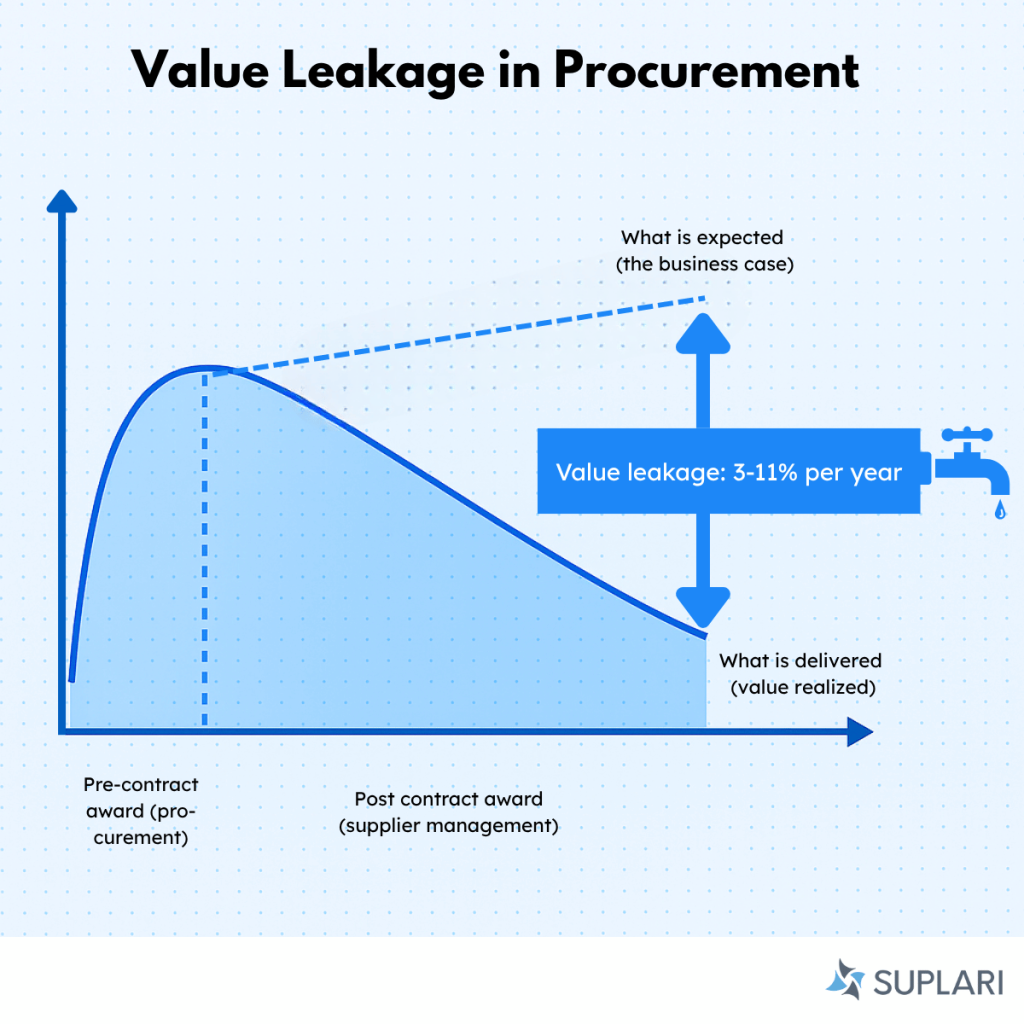
Here are some KPIs that finance teams recognize in addition to cost savings:
- Purchase price variance (PPV) – Measures the difference between the expected or standard purchase price and the actual price paid for goods or services. This KPI helps finance teams assess cost fluctuations, negotiation effectiveness, and supplier pricing consistency.
- Supplier price variance – Tracks price fluctuations across vendors for the same goods/services. Identifies opportunities for negotiation or supplier diversification.
- Cost avoidance via supplier consolidation – Demonstrates potential savings by reducing supplier fragmentation. Finance teams appreciate this KPI because it provides a quantifiable approach to long-term savings.
- Spend management waste – Common issues such as duplicate invoices, incorrect charges, and unutilized services can contribute to cost waste uncovered in analytics.
Most organizations track these KPIs in silos, but a spend analysis solution integrates them into a single cost-efficiency framework that can be validated by finance. For more information, see Suplari Agile Performance Management.
5. Advanced supplier performance KPIs for non financial management
Supplier performance is more than just on-time deliveries and competitive pricing. Procurement teams must evaluate supplier risks holistically to avoid disruptions and ensure long-term stability. While many companies track basic vendor performance metrics, few take a comprehensive approach that incorporates financial, operational, and compliance risks.
Quality & defect rates
A supplier’s defect rate measures how often products or services fail to meet contractual or operational standards. High defect rates can increase operational downtime, product returns, and customer dissatisfaction.
Contract compliance rate
One of the biggest hidden risks in procurement is non-compliance with contractual agreements. Many suppliers offer discounts, volume-based pricing, or specific service-level guarantees, but without a KPI tracking actual vs. contracted performance, businesses may overpay or receive subpar service.
Supplier risk & dependency scores
A major overlooked KPI in procurement is supplier dependency—how reliant a company is on a small number of vendors for critical supplies or services. High supplier dependency introduces risks, such as:
- Sudden cost hikes with no alternative vendors available.
- Supply chain bottlenecks if a key supplier faces financial or operational difficulties.
- Limited negotiation leverage.
Tracking a supplier risk score that factors in financial stability, geopolitical risks, and business continuity risks helps companies proactively manage supplier relationships and diversify their sourcing strategy.

Preferred supplier utilization
Many companies negotiate preferred supplier agreements to secure better pricing, service levels, and compliance assurances. However, if employees continue purchasing from non-preferred vendors, these agreements lose value. Tracking preferred supplier utilization as a KPI helps ensure that buyers adhere to contracted pricing and terms, leading to stronger cost control and compliance.
Bottom line: optimizing procurement through data-driven KPIs
Tracking the right procurement KPIs is essential for maximizing cost efficiency, supplier performance, and operational effectiveness. Many businesses begin with basic financial and spend tracking metrics, but advanced procurement teams go further—leveraging predictive analytics, supplier health scores, and risk mitigation strategies.
To fully optimize procurement, companies should:
✔ Prioritize Spend Under Management to uncover savings opportunities.
✔ Track supplier performance holistically, including risk and compliance.
✔ Use predictive analytics to move from historical reporting to forward-looking procurement strategies.
✔ Integrate KPIs into a centralized spend analysis solution to gain real-time insights and drive continuous improvement.
By implementing these high-impact KPIs, you can turn data into a competitive advantage—reducing costs, strengthening supplier relationships, and ensuring long-term business resilience.Evaluating spend analysis solutions? Book a demo to see why Suplari is the #1 spend analytics solution based on customer feedback evaluated by analyst firms like Gartner and Spend Matters.
About Suplari
Suplari is a procurement intelligence solution that helps businesses modernize procurement operations using AI. Suplari provides actionable insights to manage suppliers, deliver savings and manage compliance beyond the limits of traditional spend analytics. Suplari's unique AI data management foundation empowers enterprise businesses to transform procurement operating models with reliable, AI-ready data.
FAQs on Procurement KPIs
What is spend under management and why does it matter?
Spend under management (SUM) measures the proportion of total company spend actively managed by procurement. The greater the SUM, the more opportunities a company has to negotiate better contracts, consolidate vendors, and find savings. Suplari's spend analytics solution helps track SUM alongside other critical metrics to uncover hidden cost-saving opportunities.
How do you prove procurement cost savings to finance?
Finance teams recognize metrics like purchase price variance (PPV), supplier price variance, and cost avoidance via supplier consolidation. Suplari integrates these KPIs into a single cost-efficiency framework that finance can validate, moving beyond basic savings claims to demonstrate quantifiable financial impact through data-driven insights.
What procurement KPIs are most often overlooked?
High-impact overlooked KPIs include supplier dependency scores, preferred supplier utilization rates, and new or unaccounted-for spend categories. These metrics reveal hidden risks and opportunities that basic financial KPIs miss. Suplari's advanced analytics combines multi-dimensional KPI views to provide deeper insights into supplier performance and cost control.

