




Recent data from both the Boston Consulting Group and the EY Global CPO Survey highlight procurement's evolving strategic role and the imperative to embrace advanced technologies like generative AI.
This comprehensive guide provides you with a structured approach to implementing AI in your procurement organization based on a decade of experience developing AI solutions for procurement at Suplari.
Generative AI in procurement as a strategic value driver
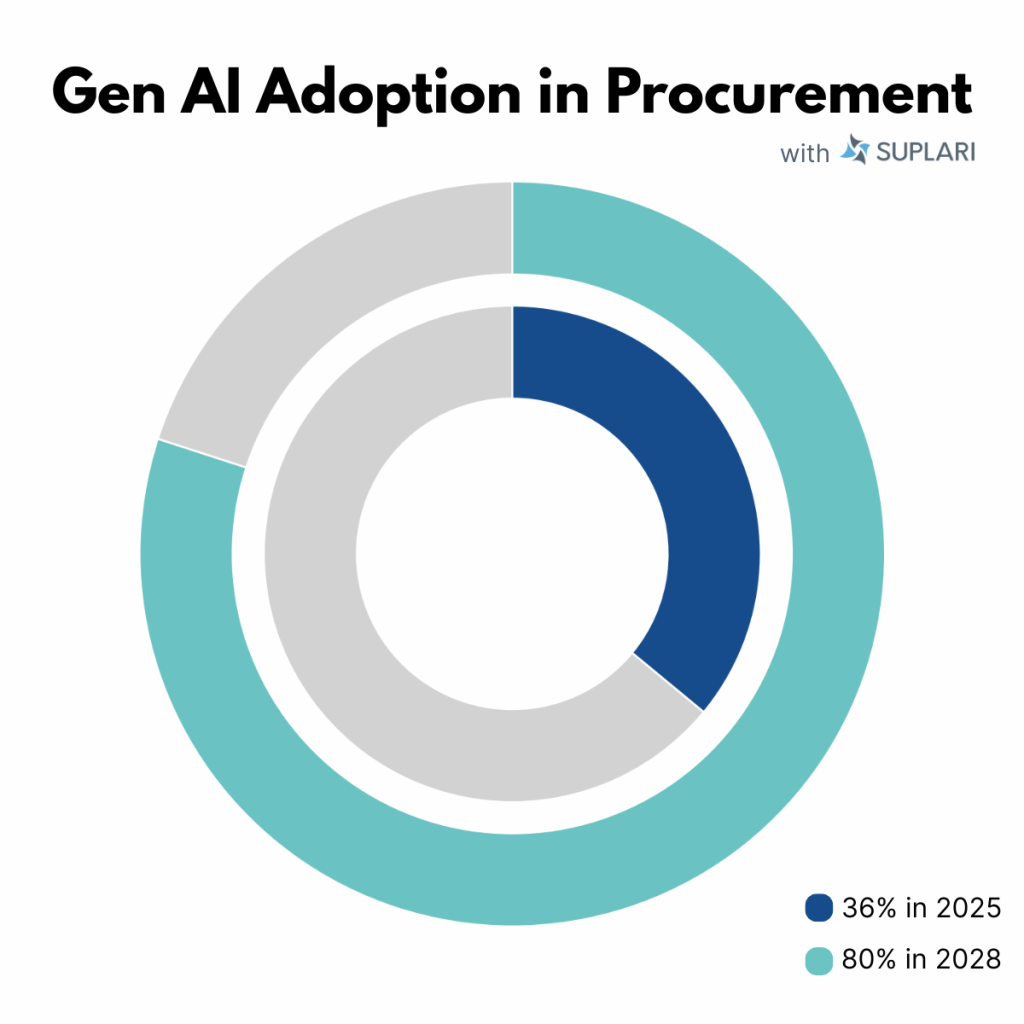
A recent survey by EY reveals that 80% of global CPOs plan to deploy generative AI in some capacity over the next three years, recognizing its potential to drive margin expansion and create competitive advantage.

While enthusiasm for AI is clear, most procurement teams still lack a clear action plan for utilizing generative AI in their team beyond simple pilots or tactical use of ChatGPT.
Here are six key steps that you can take to enable generative AI in your organization before the end of this year.
Step 1: Strengthen data & technology infrastructure
Current State (EY Insight): 81% of CPOs plan to leverage new or enhanced technology solutions, with advanced data analytics and spend visualization as priority areas. Yet only 36% have meaningful AI deployment in spend analytics today.
The foundation of successful AI implementation begins with your data infrastructure. Traditional spend analysis solutions typically stop at providing reports and dashboards, placing the burden of analysis and action on procurement teams.
The fundamental difference with AI-native spend analytics is its ability to not just organize data, but to actively guide decision-making based on that data.
Key strategic actions and next steps
First, evaluate your current data ecosystem to identify gaps in master data, transactional records, and supplier information. Fragmented data across multiple systems creates significant barriers to AI effectiveness. Implement standardization protocols and establish clear data governance roles and responsibilities.
Second, create an integration roadmap connecting your ERP, P2P, SRM, and contract systems into a centralized data model, like Suplari. According to the recent research by EY, the most successful implementations start with spend analytics and contract management as initial GenAI deployment areas, aligning with the 59% of survey respondents allocating 6-15% of procurement budget to technology investments.
Finally, establish mechanisms for transparency and auditability. Your AI implementation should provide full lineage back to source data, allowing users to trace recommendations to their origins and validate accuracy. In a modern spend analytics solution like Suplari, this comes as standard.
Step 2. Develop governance & usage guidelines
Current State (EY Insight): 53% of organizations prioritize guidance/governance around generative AI, and 64% of procurement organizations already align with organization-wide targets.
When implementing AI, clear governance is essential not just for risk management but for adoption success. Unlike traditional systems where governance often focused on access control, AI governance must address decision authority boundaries, bias mitigation, and accountability.
Key strategic actions and next steps
You should establish a cross-functional AI governance committee with representatives from procurement, legal, IT, and ethics. This committee should define clear boundaries specifying where AI can operate independently versus where human oversight is required. Create escalation frameworks for AI decision thresholds - for example, AI might autonomously handle purchases below $10,000 but require human approval above that threshold.
It's critical to implement logging and audit mechanisms for all AI activities. When properly designed, these systems don't just mitigate risk - they build trust. Users need to understand how AI reaches conclusions, particularly for strategic decisions affecting supplier relationships or large expenditures.
Step 3. Reimagine procurement processes
Current State (EY Insight): 85% of CPOs are implementing internal process improvements, with category management, business partnering, and supplier relationship management as top investment priorities.
AI implementation isn't merely about automating existing processes - it's about fundamentally reimagining how procurement works. The traditional approach focused primarily on reducing manual effort, but the real value lies in improving decision quality by considering more factors and eliminating biases that lead to suboptimal choices.
Key strategic actions and next steps
Begin by mapping your procurement workflows to identify high-volume, rule-based activities suitable for initial AI implementation. However, don't stop at automating the obvious. The greatest value often comes from redesigning processes to take advantage of AI capabilities that weren't previously possible.
For instance, AI can transform category management from periodic strategic reviews to continuous intelligence gathering and opportunity identification. Supplier relationship management can evolve from reactive issue handling to proactive risk monitoring and value creation. The goal isn't just efficiency but effectiveness - making better decisions because you have better information and insights.
Suplari’s AI-driven Insights and Agile Performance Management can streamline your procurement processes, while improving your collaboration with other key stakeholders.
Step 4. Develop a change management strategy
Current State (EY Insight): 33% of organizations are developing AI change management strategies, while 84% of CPOs identify enhancing talent and skills as a priority action.
The human element of AI adoption is often underestimated. While technical implementation might take months, organizational adaptation can take years. Procurement leaders must recognize that AI initiatives are pushed from leadership but must be embraced by practitioners to succeed.
Key strategic actions and next steps
Create a compelling narrative around procurement's strategic evolution that addresses both organizational goals and individual concerns. Be transparent about how roles will change - some tasks will be eliminated, but new, higher-value responsibilities will emerge. Develop a realistic AI implementation roadmap with clear milestones that demonstrate value at each stage.
Identify and empower AI champions within the procurement team who can help bridge the gap between technical capabilities and practical application. These individuals become invaluable in translating abstract AI concepts into concrete procurement use cases that resonate with their peers.
Step 5. Address employee concerns & talent development
Current State (EY Insight): 31% of organizations are addressing employee concerns around AI, 70% of CPOs prioritize clear career development paths to attract talent, and 82% are investing in professional training programs.
AI implementation creates a fundamental talent challenge: the very people whose current jobs are most disrupted are often essential to successful implementation. This paradox requires thoughtful talent strategy that addresses both immediate concerns and long-term development.
Key strategic actions and next steps
Create "future of procurement" roles that emphasize strategic value creation rather than transactional activities. Develop training programs that build AI collaboration skills, focusing not just on technical understanding but on how to effectively partner with AI systems. Establish clear career progression paths that reward AI proficiency while preserving institutional knowledge.
Procurement leaders should recognize that while AI will eliminate some current tasks, particularly at the data analyst level, it creates opportunities for these professionals to focus on more advanced analysis and strategic activities. The greatest impact occurs when AI handles routine aspects, allowing human talent to focus on areas requiring judgment, creativity, and business context.
Step 6. Use AI to improve spend agility
Current State (EY Insight): Emphasis on supply chain risk management and resilience is ranked as the second most impactful market trend for procurement strategy, with rising inflation and challenging market conditions at the top spot.
Consider the impact of AI on procurement roles
When we talk about AI's impact on procurement, it's essential to understand how it will transform specific roles within the organization. Suplari recently released a study on the impact of AI on procurement roles between 2025 and 2035. Here is a short preview:
Procurement Analysts and AI
The most significant transformation will likely occur at the data and analytics level, for example in the daily work of procurement analysts. AI can automate the collection, cleansing, and processing of data from multiple source systems - tasks that currently consume up to 70-80% of an analyst's time. What once took 14 days of quarterly work to update a spend cube can now happen daily, with higher quality results and incorporating more data sources.
Category Managers and AI
For category managers, AI doesn't merely automate existing tasks - it expands their capacity to address areas they've never had time to explore. Most category managers maintain a mental list of high-value projects they can't prioritize due to bandwidth constraints: analyzing tail spend, developing comprehensive supplier strategies, or identifying consolidation opportunities. AI allows them to operate at a higher level, applying techniques and expertise that might otherwise be available only from specialists in particular categories.
CPOs and AI
The Chief Procurement Officer's role will similarly evolve. Today's CPOs often need to pull in their team and disrupt operations to understand deep issues or performance metrics. With AI, they can dive into the details without burdening their teams. They can build high-level strategic plans with greater confidence because they can validate across the entire spectrum of procurement activities. Perhaps most importantly, AI enables sophisticated scenario planning and "what-if" analysis that would otherwise require massive effort and modeling resources.
The strategic imperative of AI adoption
The reality of AI transformation in procurement isn't something organizations can opt out of. Your suppliers are already using AI in their go-to-market strategies, your competitors are developing AI capabilities, and the gap between leaders and laggards grows wider each month. As a recent Boston Consulting Group study indicates, AI could reduce procurement costs by 15-45% depending on category and eliminate up to 30% of current work activities.

However, the true value of AI in procurement extends far beyond cost reduction. The most significant impact comes from improving decision quality. Traditional procurement decisions are often made with limited information - educated guesses based on whatever data is readily available. AI enables procurement professionals to consider more factors, evaluate more options, and adjust decisions based on new information in ways that weren't previously possible.
For procurement executives, the challenge isn't whether to adopt AI, but how to do so strategically, responsibly, and effectively. Those who approach AI implementation as a comprehensive transformation initiative - addressing technology, process, people, and governance - will position procurement as an essential contributor to competitive advantage in an increasingly complex business environment.
Illustrative GenAI implementation roadmap
First 90 Days:
- Complete AI readiness assessment
- Establish governance committee
- Identify and prioritize initial use cases
- Begin data cleaning and standardization
- Develop initial communication plan
90-180 Days:
- Implement initial proof-of-concept projects
- Begin formal training programs
- Develop detailed process redesign plans
- Refine governance frameworks based on early learnings
- Establish comprehensive metrics and reporting
180-365 Days:
- Scale successful pilots
- Implement more advanced use cases
- Formalize new organizational structures
- Expand training to all procurement staff
- Begin measuring and reporting on ROI
Towards Agentic AI
While generative AI already looks to have transformative potential for procurement, an even bigger trend looks to be emerging in the form of AI agents built for procurement.
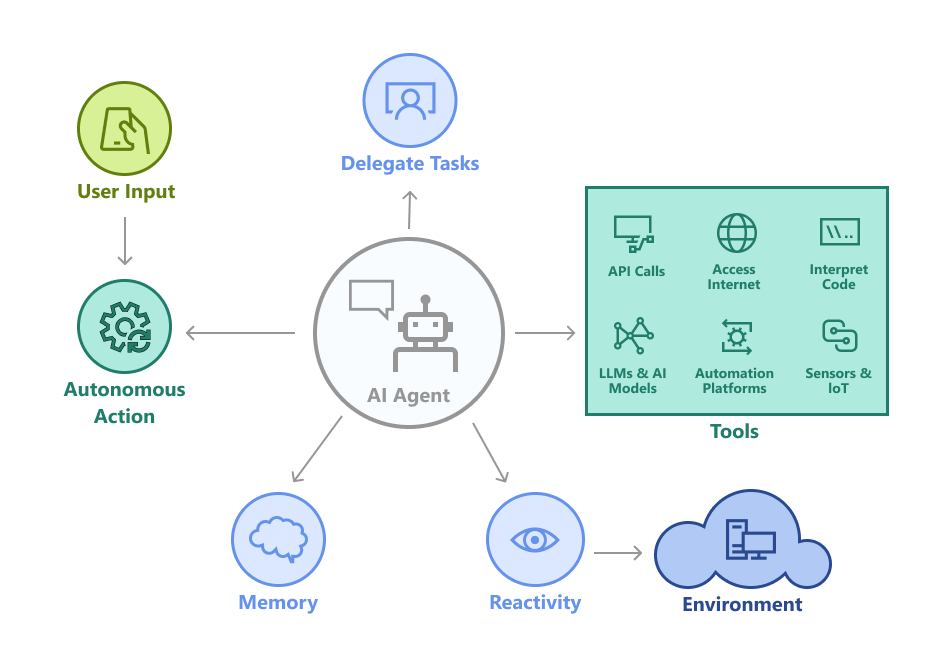
Agentic AI refers to artificial intelligence systems capable of autonomous action. Unlike traditional AI, which focuses on automating analysis and recommendations, agentic AI can initiate, manage, and complete complex tasks—such as launching an RFP, conducting supplier negotiations, or processing procurement approvals—without requiring human input at every step.
Gartner has listed Agentic AI as one of the top tech trends for 2025, but in reality, very few agentic AI systems have moved beyond the piloting stage in enterprise businesses.
Jeff Gerber, Co-founder and CEO of Suplari, explains the distinction:
“The first wave of AI adoption focused on tactical automation—replacing or augmenting common, repeatable tasks and analysis. Over time, we will see strategic agents driving procurement planning, delegating tasks to tactical agents, and enabling procurement leaders to make better decisions at scale.“
Bottom line on procurement's AI-enabled future
By systematically addressing these six areas, procurement organizations can transform from cost centers to strategic value drivers. As recent studies by EY and BCG indicate, leading procurement organizations are already directing their strategies toward creating long-term value, investing in talent, leveraging AI to unlock competitive advantages, and aligning with broader organizational sustainability targets.
The future of procurement lies in its ability to harness the power of agentic AI while developing the human capabilities needed to extract maximum strategic value from technology investments. Those who embrace this transformation will position procurement as an essential contributor to organizational success in an increasingly complex global business environment.
Schedule your meeting with Suplari to see how you can lead the transformation.
About Suplari
Suplari is a procurement intelligence solution that helps businesses modernize procurement operations using AI. Suplari provides actionable intelligence to manage suppliers, deliver savings and manage compliance beyond the limits of traditional spend analytics. Suplari’s unique AI data management foundation empowers enterprise businesses to transform procurement operating models with reliable, AI-ready data.

