




The global trade landscape is undergoing seismic shifts. President Trump's "America First Trade Policy" has unleashed a wave of tariffs affecting over 41% of U.S. imports and 38% of intermediate goods used by manufacturers. For procurement leaders, this isn't just another market disruption – it's a fundamental reshaping of the sourcing ecosystem that demands immediate, strategic response.
Let’s outline a comprehensive 30-60-90 day action plan for procurement teams based on a decade of experience supporting enterprise procurement at Suplari.
Tariffs are reshaping the global supply chain landscape
The recent wave of tariff implementations represents one of the most significant trade policy shifts in decades:
- 145% duties on imports from mainland China,
- Delayed but pending 25% tariffs on Mexico and Canada (with 10% on energy-related imports),
- Removal of exemptions on steel (25%) and aluminum (10%) tariffs,
- A proposed "Fair and Reciprocal Plan" that would increase duties on imports from countries with higher import duties than the U.S.
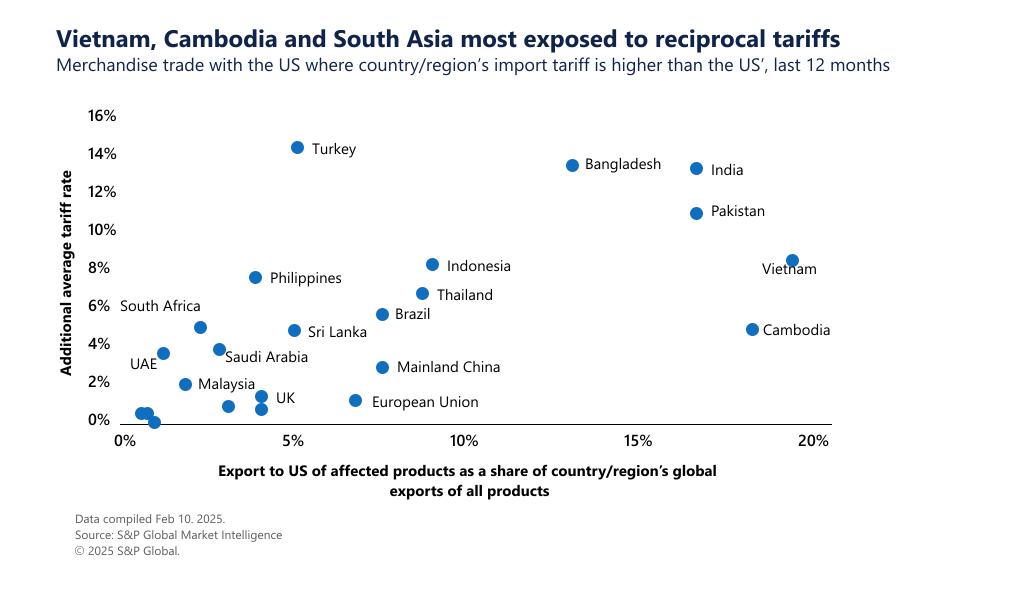
What makes this wave particularly challenging is its scope and complexity. These tariffs will affect 41.8% of all U.S. imports and 38.3% of intermediate goods used by manufacturers, according to S&P Global Market Intelligence.
Even if your organization doesn't directly import from these countries, the ripple effects through multi-tier supply chains mean nearly every business will feel the impact in some way. The question isn't whether your procurement team will face tariff-related challenges, but how effectively you'll respond to them.
Procurement needs to rise to the challenge of tariffs
The significance of this tariff wave goes beyond simple cost increases. Here's why this moment demands special attention from procurement leadership:
Complex, multi-layered impact
Unlike isolated commodity price fluctuations or supplier disruptions, tariffs create compounding effects throughout the supply chain. When a part manufactured in China faces a 10% tariff, that cost increase flows through assemblers, distributors, and ultimately to your purchasing department – often with additional markup at each stage.
Widespread category exposure
Both direct and indirect categories are significantly affected. According to recent data, price increases are projected at:
- Electronics: +7%
- Fabricated metals: +6%
- Electrical machinery: +4%
- Machinery: +3%
Even services categories that rely on equipment, parts, or consumables from affected regions will see cost pressures.
Compressed decision timelines
While some tariffs have been announced with delayed implementation (like those on Canada and Mexico), others took effect immediately. This compressed timeline forces procurement teams to make consequential decisions about inventory, contracts, and sourcing strategies with limited information.
Competitive differentiation opportunity
Those who respond effectively will create significant competitive advantage. As retail giants like Walmart, Target, and TJX have demonstrated, organizations with the agility to adjust sourcing, negotiate with suppliers, and optimize inventory can not only weather tariff storms but emerge stronger.
The combination of these factors makes this a defining moment for procurement teams. How you respond in the coming days and weeks will have lasting implications for cost structures, supplier relationships, and overall business performance.
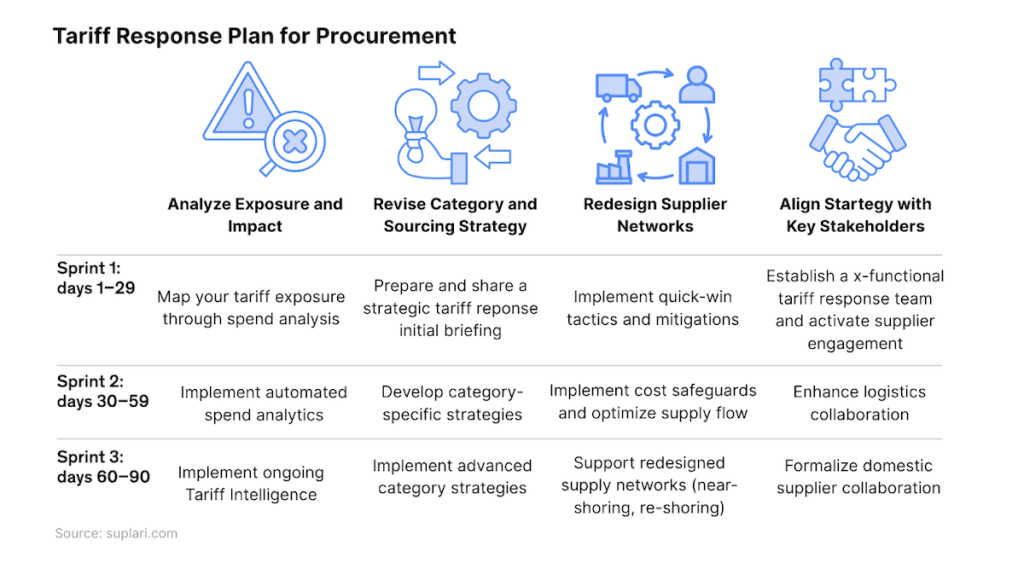
The 30-Day Action Plan: Immediate Response
The first 30 days of your tariff response strategy should focus on assessment, communication, and quick-win mitigation tactics. Here's your immediate action plan:
1. Conduct a Tariff Impact Assessment
Map your exposure
- Use a procurement analytics solution to identify affected suppliers, categories, and countries of origin
- Prioritize assessment by spend volume, strategic importance, and tariff rate
- Quantify the potential financial impact of announced and proposed tariffs
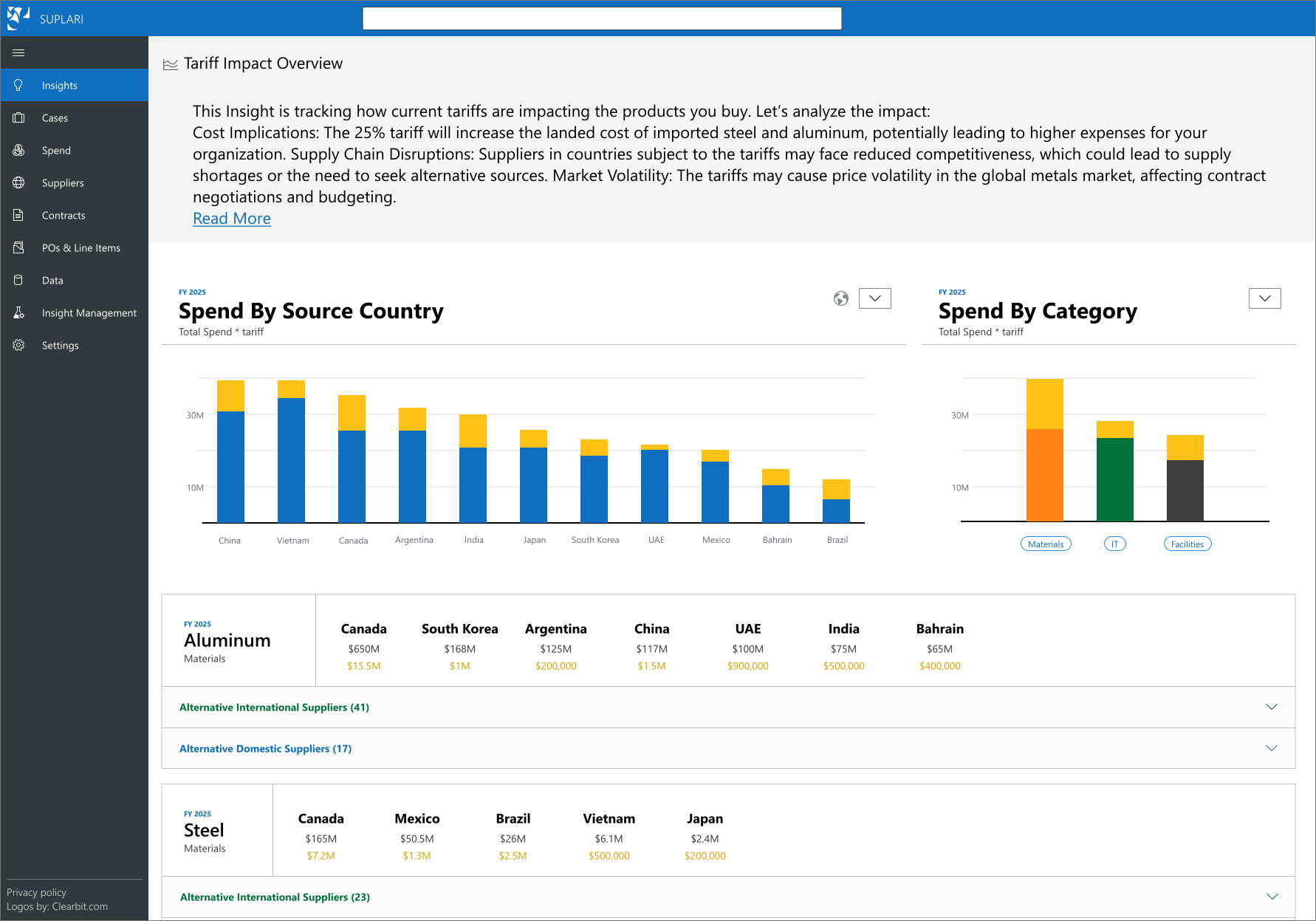
With Suplari's Tariff Insights Overview, procurement teams can rapidly visualize exposure by mapping HTS codes, country of origin, and supplier details against transactional data.
Review contract terms
- Identify key supplier contracts with tariff clauses or force majeure provisions
- Assess supplier abilities to absorb, share, or pass through increases
- Document renewal dates and renegotiation opportunities
Develop initial briefing
- Create a concise, data-driven executive summary of tariff exposure
- Segment impacts by business unit, category, and timeframe
- Develop preliminary recommendations for immediate action
2. Establish a Tariff Response Team
Assemble cross-functional expertise
- Identify key stakeholders from procurement, finance, supply chain, and legal
- Establish clear roles, responsibilities, and decision-making authority
- Create a communication cadence and reporting structure
Activate supplier engagement
- Prioritize outreach to most-affected suppliers
- Request formal supplier positions on tariff pass-through plans
- Initiate collaborative discussions on mitigation strategies
3. Implement Quick-Win Tactics
Execute immediate mitigation
- Accelerate orders for high-impact items before tariff implementation dates
- Identify alternative sources for critical components from non-affected countries
- Review inventory policies to determine optimal buffer stock levels
Prepare for strategic response
- Gather supplier responses and consolidate findings
- Identify key decision points and trigger events for escalation
- Develop the framework for your 60-day strategic response
Throughout these first 30 days, visibility is your most powerful asset. Organizations with the ability to quickly identify, quantify, and visualize tariff impacts can act decisively while competitors are still gathering basic information.
The 60-Day Action Plan: Strategic Adjustments
With immediate assessment and quick wins underway, the 60-day horizon allows for more strategic interventions:
Develop Category-Specific Strategies
Conduct deep-dive analysis
- Perform detailed cost modeling for high-impact categories
- Identify cost-sharing opportunities with suppliers
- Develop category-specific playbooks for tariff response
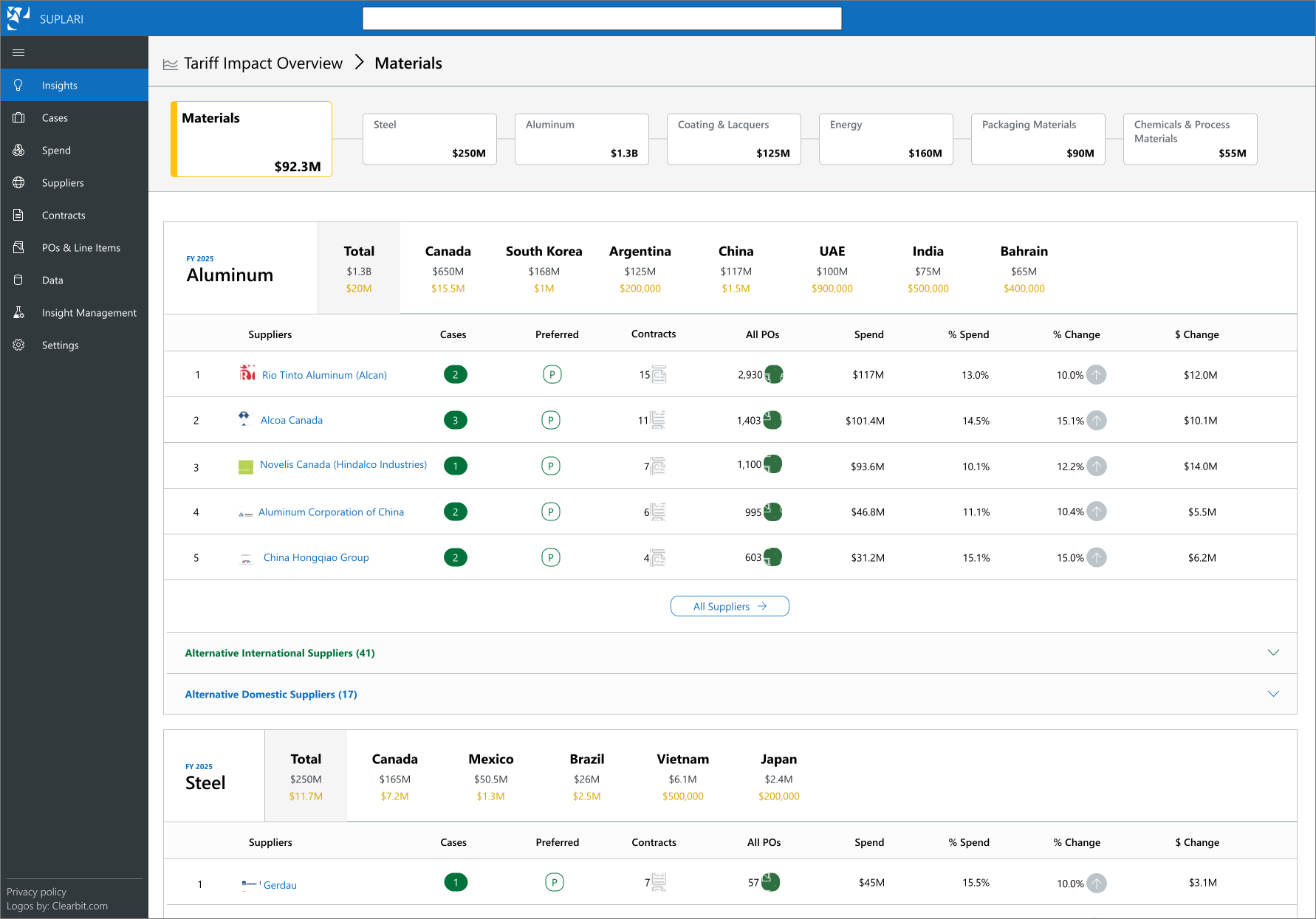
Use Suplari's AI-native spend analysis Insights to identify patterns in supplier pricing, benchmark against alternatives, and quantify potential savings from strategic adjustments.
Implement strategic sourcing shifts
- Launch RFIs/RFPs for alternative suppliers in non-affected regions
- Develop substitution strategies for high-tariff components
- Create qualification plans for new suppliers or alternate materials
Optimize Inventory and Supply Flow
Refine your inventory strategy
- Adjust safety stock levels for critical, tariff-affected items
- Implement just-in-time strategies where advantageous
- Consider consignment arrangements with key suppliers
Enhance logistics optimization
- Evaluate distribution center locations and flow paths
- Consider changing ports of entry or routing strategies
- Explore Foreign Trade Zone (FTZ) opportunities for duty deferral
Deploy Contract and Price Protection Measures
Implement pricing safeguards
- Renegotiate key contracts with tariff protection clauses
- Implement price locks where possible
- Develop escalation frameworks for unavoidable increases
Throughout the 60-day phase, procurement teams should leverage data to drive decision-making. Suplari's spend intelligence platform allows teams to model cost scenarios, identify savings opportunities, and track the effectiveness of mitigation strategies in real-time.
The 90-Day Action Plan: Building Long-Term Resilience
The final phase of your tariff response plan focuses on structural changes that build lasting resilience:
1. Redesign Supply Chain Networks
Evaluate structural changes
- Assess nearshoring or reshoring opportunities for critical components
- Consider vertical integration for strategic categories
- Evaluate supplier consolidation or diversification strategies
Develop network optimization plan
- Create detailed business cases for major supply chain shifts
- Identify phased implementation approach for structural changes
- Secure executive buy-in for long-term transformation initiatives
2. Implement Advanced Category Strategies
Deploy category innovation
- Work with R&D on product redesigns to reduce tariff exposure
- Explore material substitutions that maintain quality while reducing cost
- Develop should-cost models that account for tariff impacts
Formalize domestic supplier collaboration
- Establish joint cost-reduction programs with strategic suppliers
- Implement shared savings mechanisms for tariff mitigation
- Create formal risk-sharing agreements for future trade policy changes
3. Build Sustainable Monitoring Capabilities
Establish ongoing Tariff Intelligence
- Implement automated tariff monitoring and alerting
- Create regular reporting on tariff exposure and mitigation progress
- Develop scenario planning capabilities for future trade policy shifts
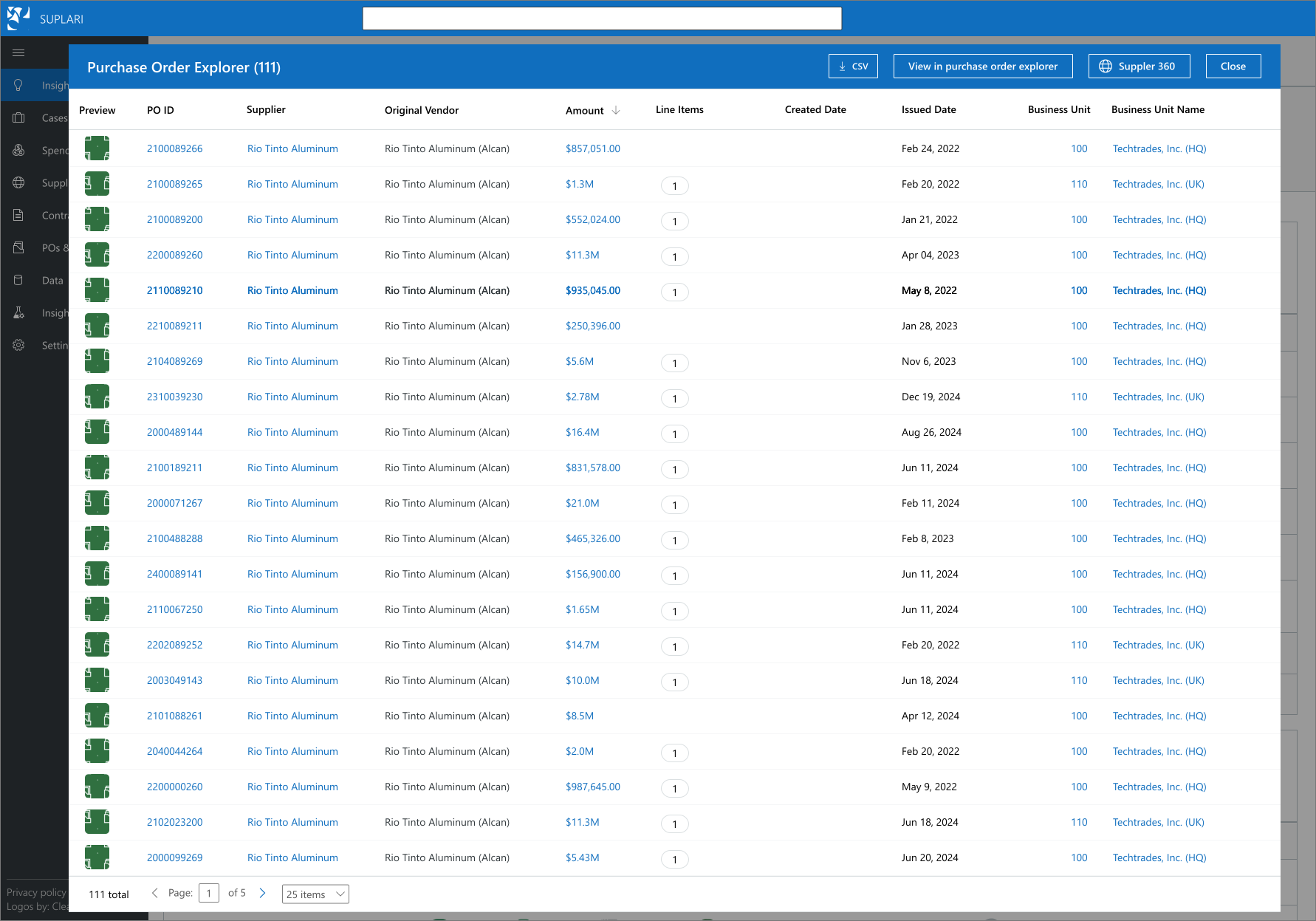
With Suplari's continuous monitoring capabilities, procurement teams can stay ahead of tariff changes with automated alerts, trend analysis, and predictive insights on supply chain impacts.
How Leading Companies Are Responding to Tariffs
Major retailers and manufacturers are already demonstrating effective tariff response strategies. Here are some recent tariff management best practices shared in investor relations reports.
Diversifying supply chains
Target has reduced Chinese sourcing from 60% to 30% since 2017, with plans to get below 25% by 2026. Walmart now sources over two-thirds of products domestically. This long-term diversification strategy reduces vulnerability to country-specific tariffs and trade policy shifts.
Negotiating with off-shore suppliers
Walmart has asked Chinese manufacturers to trim prices by up to 10% for each round of tariffs. Best Buy expects its manufacturers to absorb part of the tariff burden. These negotiations demonstrate that tariff impacts can be shared across the supply chain rather than fully absorbed by the buyer.
Implementing strategic pricing
TJX is treating the tariff situation as a buying opportunity, capitalizing on excess inventory from retailers canceling orders. Macy's is taking a "case-by-case" approach, passing costs on selectively while maintaining value perception. These strategies show that thoughtful pricing can maintain competitiveness even amid rising costs.
Optimizing inventory and timing
Several companies are adjusting inventory management in light of tariffs. Target has cut lead times by 20% in apparel to reduce volatility. Macy's secured inventory before tariff implementation to avoid immediate impact. These tactical adjustments demonstrate the importance of timing in tariff response.
5 key metrics to track during tariff implementation
To measure the effectiveness of your tariff response, focus on these critical metrics:
Suplari's analytics platform provides automated tracking of these metrics, with customizable dashboards that give procurement leaders real-time visibility into their tariff response performance.
Building your cross-functional tariff response team
Effective tariff management requires collaboration across multiple functions:
Essential Stakeholders to Involve
- Procurement: Category managers and sourcing specialists with supplier relationships
- Finance: Treasury and FP&A teams to assess financial impact and funding implications
- Supply Chain: Logistics and inventory specialists to optimize flow and storage
- Legal: Contract experts to review terms and force majeure provisions
- Executive Leadership: C-suite sponsors to remove obstacles and prioritize resources
Communication Framework
Establish a clear communication cadence:
- Daily updates during initial assessment phase
- Weekly status reports throughout the 90-day plan
- Monthly executive briefings on progress and challenges
- Regular supplier communications to maintain transparency
Decision-Making Process
Define a tiered approval structure:
- Category managers empowered for tactical adjustments
- Director-level approval for supplier changes or contract modifications
- Executive approval for major strategic shifts or significant investments
With Suplari as the agile performance management platform, this cross-functional team can make coordinated, data-driven decisions that balance immediate cost control with long-term supply chain resilience.
Turn tariff challenges into competitive advantage
The current tariff environment presents both significant challenges and strategic opportunities for procurement teams. Those who respond reactively—absorbing costs, accepting disruption, and hoping for policy reversals—will face margin erosion and competitive disadvantage.
But organizations that approach tariffs strategically—with data-driven assessment, cross-functional collaboration, and AI-powered decision support—can turn this challenge into a catalyst for supply chain transformation.
The 90-day plan outlined in this article provides a roadmap for that transformation:
- First 30 days: Gain visibility, communicate effectively, and implement quick wins
- Days 31-60: Deploy strategic sourcing shifts, optimize inventory, and protect pricing
- Days 61-90: Redesign supply networks, innovate categories, and build monitoring capabilities
Throughout this journey, Suplari's AI-native spend analytics platform provides the intelligence, insights, and decision support needed to navigate the complexity of global tariffs with confidence.Ready to transform your tariff response strategy? Request a demonstration of Suplari's Tariff Insights Overview and discover how AI-powered spend intelligence can help your organization thrive in today's volatile trade environment.
About Suplari
Suplari is a procurement intelligence solution that helps businesses modernize procurement operations using AI. Suplari provides actionable intelligence to manage suppliers, deliver savings and manage compliance beyond the limits of traditional spend analytics. Suplari’s unique AI data management foundation empowers enterprise businesses to transform procurement operating models with reliable, AI-ready data.

