



Procurement analytics applies descriptive, diagnostic, predictive, and prescriptive analysis to spend, supplier, and contract data to guide sourcing, savings, and risk decisions. The ten highest-value use cases: continuous savings discovery, maverick-spend control, supplier consolidation, category strategy, contract compliance, risk monitoring, working-capital optimization, tariff modeling, finance alignment, and autonomous AI agents. Six core dashboards — spend overview, savings, supplier, category, compliance, and risk — turn the analysis into daily operating tools.
Difference between procurement analytics and spend analytics
Procurement analytics gives procurement organizations visibility into spend, supplier performance and policy compliance. They collect and unify procurement data from systems like ERP, finance, contract management, and supplier portals, then transform that data into actionable dashboards and prescriptive insights to improve sourcing, cost forecasting, category management and risk mitigation activities.
Procurement analytics replaces more limited spend analysis solutions giving procurement organizations holistic visibility on procurement performance, and not just spend under management. The key benefit is that you’re able to continuously manage your costs and cash flow in a data-driven way.
How analytics is used by an enterprise procurement organization
Analytics for procurement is most often bought by enterprise businesses as a software-as-a-service from solution providers like Suplari. These procurement analytics platforms allow you to:
- Track spend analytics by category, supplier, business unit, or region
- Monitor supplier performance and flag potential risks
- Identify maverick spend or off-contract purchasing
- Forecast future purchasing needs and plan accordingly
- Streamline procurement workflows with automated reporting
- Align with key business stakeholders to identify and realize value from strategic sourcing
The best procurement analytics software does more than just generate reports—it connects data from across the business, normalizes it, and presents it in a way that helps you make strategic decisions fast.
Origins in procurement spend analytics
The procurement analytics category emerged from spend analysis reports and tools developed over the past three decades. In the early years, spend analysis was done by consultants or dedicated procurement analysts. Today, it has turned into procurement software category leader expected to reach a size of $32.3 billion by 2031.
What spend analytics is used for in procurement
Spend analysis reports allow you to understand exactly how money is being spent across the organization—by supplier, category, department, business unit, or geography. This visibility is immensely valuable for identifying cost saving opportunities, optimizing supplier relationships, and enforcing policy compliance across your procurement operations.
When you have full transparency into spend patterns, you can better manage supplier consolidation, eliminate unnecessary purchases, and negotiate from a position of strength. It’s how procurement organizations reduce waste, increase leverage, and support strategic sourcing.
Enabling data-driven category management
Automated spend analytics is also a key enabled for strategic category management. Your category leads need to know where they can consolidate, where pricing needs to be reevaluated, and which suppliers deserve long-term investment. A procurement analytics solution that supports this level of visibility turns category planning from guesswork into precision.
Today, there are dozens of spend analytics software solutions available in the market focused on different kinds of businesses. Some solutions focus more on spend harmonization and classification, while others are created as self-service tools you need to manage yourself. You can consider any spend analysis tool that goes beyond backward-looking spend reporting a procurement analytics solution.
Six essential analytics dashboards for procurement
If you’re evaluating the best procurement analytics software, one of the first things to look at is the dashboard experience. Dashboards are where data becomes usable. They’re the interface between insight and action.
At a minimum, your procurement analytics platform should include:
- Spend analytics dashboard
- Supplier performance dashboard
- Budget tracking dashboard
- Contract management dashboard
- Procure-to-pay (P2P) process dashboard
- Risk and compliance dashboard
Each of these dashboards should automatically pull data from multiple systems and display information in a way that’s actionable. For example, if a supplier is underperforming, your dashboard should flag it with a trendline, a scorecard, and perhaps a list of related incidents or late deliveries.
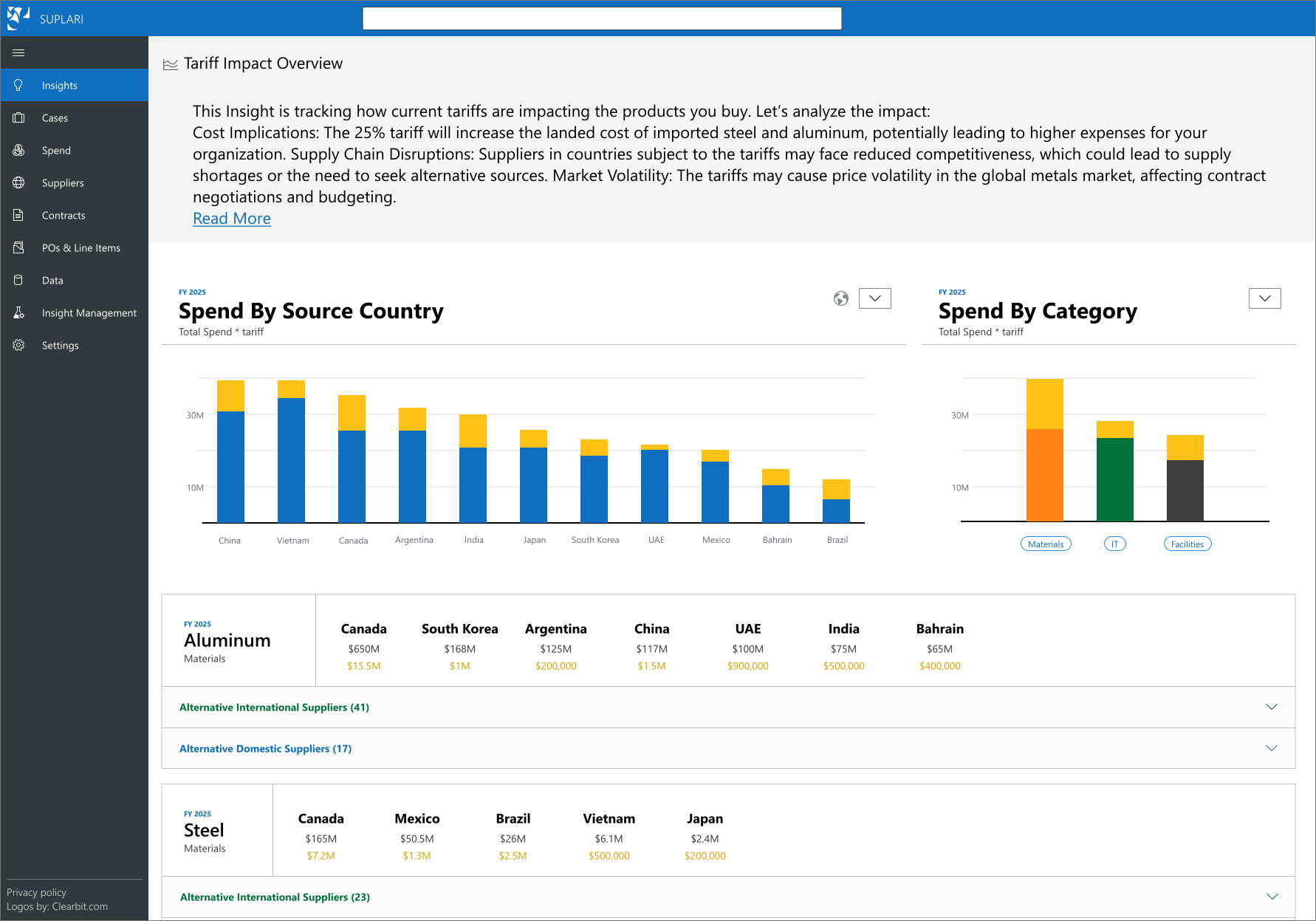
Example of a procurement analytics dashboard in 2025: Tariff Impact Overview in Suplari
In procurement analytics, dashboards aren’t just about visualization—they’re about focus. The best ones help your team quickly zero in on what matters, instead of drowning in data.
Configurable procurement analytics report examples
Beyond dashboards, many organizations still rely on formal reports to share insights with leadership or cross-functional stakeholders. Here are a few high-impact procurement analytics report examples that you might generate with the right software:
Procurement ReportsQuarterly spend performance by business unitTop 20 suppliers by non-compliance rateUpcoming contract expirations and renewal opportunitiesCost savings achieved through strategic sourcing eventsProcurement cycle time benchmarks by category or teamBudget variance report with forecast adjustments
Reporting needs will differ greatly between procurement organizations. A best-fit procurement analytics solution needs to be configurable to your unique business needs.
Key benefits of analytics for procurement
The true value of procurement analytics lies in what it enables your team to do. At the enterprise level, where every percentage point of savings or process improvement can translate into millions in the bottom line impact, having a centralized view of your procurement data unlocks measurable impact.
Here’s what the best procurement analytics software delivers:
1. Improved operational efficiency
Manual procurement processes slow your team down. Without automation, your analysts and category managers waste time pulling data, formatting spreadsheets, and chasing down information. With analytics software, you can automate procurement processes, reduce repetitive tasks, and keep your team focused on strategic activities.
Suplari’s ready-made dashboards, automatic insights and alerts help you identify bottlenecks in procurement workflows, streamline approvals, and ensure that POs, invoices, and contracts move smoothly across systems. The result: measurably faster cycle times, fewer errors, and more responsive procurement operations.
2. Better budget management and forecasting
Procurement leaders are increasingly expected to support financial planning, not just execute purchases. With accurate and real-time budget tracking, you can identify when a business unit is about to overspend—or underspend—and adjust course before it becomes a problem.
Suplari allows you to compare actual spend to forecasts, track variance, and use historical data to improve future projections. You’re no longer flying blind. You’re using data to guide every conversation with finance.
3. Strategic sourcing and supplier negotiations
Procurement analytics supports smarter strategic sourcing by giving you deep insight into supplier performance, spend concentration, and contract utilization. With clear visibility into past transactions and performance trends, your team enters every negotiation with leverage.
Suplari saves your team hundreds of hours in supplier relationship management. Through action-focused reports like the Supplier 360° you can identify which partners are delivering value and which are underperforming. When the data speaks, supplier conversations become more productive and fact-based.
4. Realized cost savings
Ultimately, procurement analytics helps you uncover cost saving opportunities that are buried in the noise. By analyzing spend by supplier, category, and department, you can find duplication, inefficiencies, or fragmented sourcing strategies.
You might identify that multiple teams are buying the same service from different vendors. Or that you’re not hitting volume discounts because spend is spread across too many suppliers. Or that a contract is expiring soon and can be renegotiated for better terms.
Through Suplari’s Agile Performance Management solution, you’re able to drive cost savings measurably and consistently across your procurement organization.
5. Stronger alignment with business goals
Great procurement analytics connects your work to broader business performance goals. Whether that’s increasing profitability, supporting ESG initiatives, or reducing risk, the ability to provide actionable insights makes procurement a strategic partner.
Suplari Connect helps you communicate your value through closed-loop feedback and collaboration with key stakeholders like Finance. When you can show your impact on cost reduction, supplier performance, and operational efficiency through clear dashboards and reports, you elevate procurement’s role in the organization.
10 best analytics use cases for procurement enabled by AI
Artificial Intelligence is rapidly transforming procurement, unlocking opportunities to streamline procurement processes, enhance strategic sourcing, and deliver significant cost savings. In a recent conversation, Jeff Gerber, CEO and co-founder of Suplari, highlighted that “AI fundamentally changes the way we work,” comparing its impact to that of the internet itself.
Here are 10 compelling use cases illustrating how the best procurement analytics software leveraging AI drives business performance and operational efficiency:
1. AI-powered spend categorization
In Suplari, AI can automatically categorize, normalize, and enrich spend data, providing detailed insights across the entire procurement process. This dramatically accelerates spend analysis, helping procurement teams quickly identify cost saving opportunities and areas for supplier consolidation.
2. Automating procurement workflows
Gerber shared how Suplari is developing Procurement AI agents that can significantly reduce repetitive tasks in procurement workflows, such as approving purchase requests, invoice matching, or compliance reporting. Once deployed, AI agents can free up procurement teams to focus on strategic sourcing and supplier negotiations, driving operational efficiency and improving business performance.
3. Predictive analytics for supplier risk management
Suplari recently revealed a new Supplier Intel feature that provides a real-time feed of news related to key suppliers. In the future, Supplier news can be linked to advanced AI and predictive analytics to publicly traded financial data, enabling procurement teams to proactively identify supplier risks—such as financial instability or geopolitical disruptions—before they impact the supply chain. This enhances supplier management capabilities, improving strategic decision making and overall supply chain management.
4. Strategic contract lifecycle management
In Suplari's Agile Contracts, AI actively enriches the contract management process by continuously monitoring contracts, ensuring compliance, tracking expirations, and recommending timely renegotiations. This helps procurement teams prevent value leakage, optimize contracts, and strengthen supplier relationships.
5. Optimizing resource allocation and budget tracking
In Suplari Connect, AI-driven analytics enables real-time budget management, allowing procurement and finance teams to collaborate more effectively. AI software tracks spend against budgets and proactively forecasts variances, enabling agile resource management and smarter financial planning.
6. Streamlined supplier management and performance tracking
AI-based procurement analytics software can dynamically generate supplier performance scorecards, such as the Supplier 360° dashboard found in Suplari, evaluating key procurement metrics like performance reliability, compliance, and service quality. This supports data driven procurement strategies and fosters improved supplier relationships.
7. Actionable business insights with intelligent assistants
Gerber described how Suplari AI Agents are being developed to integrate directly into existing procurement software systems, providing teams with actionable business insights in real-time. These intelligent assistants can answer complex questions instantly, significantly improving operational efficiency.
8. Enhancing indirect spend management
In many procurement organizations, AI has revealed hidden procurement efficiencies in indirect spend management. AI-driven analytics can reveal fragmented and unmanaged spend across indirect categories. By quickly identifying opportunities for supplier consolidation and strategic sourcing, procurement teams can achieve substantial indirect spend cost savings, contributing significantly to overall business performance.
9. Real-time diversity insights in procurement analytics reporting
AI-powered analytics drastically shortens procurement analysis cycles, producing sophisticated procurement analytics reports rapidly. One example Gerber highlighted is Diversity Insights, where AI-identifies all diverse spend in a spend base leveraging its partner database. Enriched data continually refreshes, eliminating one-off analysis, allowing users to see how Diverse spend is changing month over month.
10. Seamless integration capabilities for rapid deployment
Gerber emphasized Suplari’s robust integration capabilities, describing how AI procurement analytics solutions easily connect with existing ERP, accounting systems, and 3rd party supplier data systems. This ensures rapid time-to-value, allowing enterprises to leverage data effectively across their existing systems immediately.
The role of AI-driven procurement analytics in supplier performance management
Agentic AI redefines how procurement teams manage supplier performance, transforming dashboards from passive reporting tools into autonomous assistants that monitor, predict, and act in real time.
As Jeff Gerber, CEO of Suplari, highlighted, AI has evolved beyond simply surfacing insights.It can now perform deep research, create strategies and execute tasks—optimizing procurement workflows without requiring constant human intervention. This is particularly powerful in supplier management, where AI-driven procurement analytics software doesn’t just highlight supplier risks but actively mitigates them.
Imagine in the near future supplier management dashboards within your procurement analytics solution that incorporate AI agents capable of:
- Autonomously tracking supplier performance—AI continuously evaluates on-time delivery rates, quality metrics, and response times, detecting deviations before they become costly problems.
- Enforcing contract compliance—Instead of manual audits, AI ensures vendors adhere to pricing agreements, service levels, and negotiated terms, flagging anomalies and initiating corrective actions automatically.
- Predicting and mitigating supplier risks—By analyzing financial health, geopolitical exposure, and supplier concentration risk, AI can proactively suggest alternative vendors and strategic sourcing opportunities before disruptions occur.
- Optimizing supplier spend and consolidation—AI dynamically assesses spend patterns and recommends volume consolidation opportunities to maximize discounts and reduce redundancy.
This evolution marks the shift from static supplier analytics to an intelligent procurement ecosystem, where AI doesn't just present insights—it takes action, helping procurement teams streamline supplier management and focus on higher-value strategic initiatives.
AI-driven contract lifecycle management: beyond tracking to automated execution
Contracts are critical to procurement strategy, but traditional contract lifecycle management (CLM) tools have only scratched the surface of what’s possible. Agentic AI will change that by introducing automated contract intelligence—where AI not only monitors agreements but actively executes contract-related workflows.
Imagine the potential for procurement teams to leverage AI for:
- Real-time contract monitoring—Instead of waiting for manual reviews, AI continuously scans active contracts, ensuring that pricing, SLAs, and renewal cycles are proactively managed.
- Automated renewal and renegotiation alerts—AI tracks renewal dates, contract utilization rates, and spend data, initiating renegotiations automatically based on real-time performance metrics.
- Predictive contract compliance enforcement—AI assesses supplier adherence to contract terms and, if discrepancies are found, can autonomously escalate compliance measures or suggest corrective actions.
- Dynamic cost optimization—By integrating with spend analytics and vendor management, AI identifies opportunities to renegotiate pricing, consolidate contracts, or shift spend to higher-performing suppliers.
As Gerber noted in his interview, AI agents are already capable of automating procurement processes that once required dedicated teams to manage. This means contract lifecycle management is evolving from a static repository of agreements to an active, self-optimizing system that ensures procurement teams never miss cost-saving opportunities or compliance risks.
Towards autonomous and intelligent contract management
With AI as a strategic partner, procurement leaders no longer need to react to contract expirations, supplier issues, or compliance gaps. Instead, AI anticipates challenges, orchestrates resolutions, and drives procurement towards autonomously efficient operations—a future where procurement teams focus less on firefighting and more on data driven strategic decision making.Automate procurement processes and eliminate repetitive tasks.
AI-driven integration: Connecting procurement to the entire enterprise
The next major area of breakthrough expected from Procurement AI agents is in data and systems integration. Even the best procurement analytics software is only as powerful as its ability to integrate with existing enterprise systems. Agentic AI has potential to augment procurement software by dynamically interacting with multiple systems, ensuring real-time data synchronization and eliminating manual reconciliation efforts.
Traditional integration required pre-defined connectors and IT-heavy data pipelines. With AI, real-time contextualization of procurement data can deliver seamless interaction between:
- ERP platforms (SAP, Oracle)—AI harmonizes spend data, vendor information, and transaction details across multiple platforms, reducing reconciliation errors.
- Finance and accounting systems—Instead of batch data transfers, AI monitors financial processes continuously, adjusting procurement recommendations based on live budget data.
- Contract lifecycle management tools—AI actively analyzes procurement data to enforce contract terms, suggest renegotiations, and prevent off-contract purchases.
- Supplier databases and onboarding systems—AI automatically enriches supplier profiles, evaluating risk factors and optimizing vendor relationships.
- Sourcing and requisition systems—Instead of waiting for category managers to assess supplier options, AI agents proactively recommend sourcing strategies based on market conditions.
This intelligent integration capability removes traditional system bottlenecks, ensuring data driven decisions are made in real time—without IT dependency. AI doesn’t just connect systems; it continuously refines procurement insights, keeping organizations ahead of supply chain challenges.
Agentic AI as a driver of business performance
AI-driven data analytics has the potential to transform procurement from a cost center into a performance accelerator, enabling teams to react faster, optimize spend, and mitigate risk.
Here’s how AI-powered procurement analytics can enhance business performance further:
- Proactive spend forecasting—AI-driven trend analysis anticipates purchasing needs, reducing waste and improving supplier negotiations.
- Autonomous supplier performance tracking—AI monitors vendor performance in real-time, ensuring supplier relationships are optimized for quality and cost-effectiveness.
- Continuous contract optimization—AI detects underutilized contracts and suggests renegotiation opportunities, preventing spend leakage.
- Risk-aware financial planning—AI flags budget variance patterns, ensuring procurement aligns with corporate financial planning and risk mitigation strategies.
- Regulatory compliance enforcement—AI continuously audits procurement activities, ensuring compliance with internal policies and data protection regulations.
Gerber noted that AI can take on procurement tasks at scale, handling the complexity of supply chain management while enabling procurement leaders to drive data driven procurement strategies that support enterprise-wide growth. With AI not just analyzing data, but actively managing procurement workflows, procurement teams unlock significant cost savings and operational agility—setting a new standard for efficient procurement in the AI-powered enterprise.
Agentic AI and the evolution of predictive analytics
Procurement is undergoing a fundamental transformation. Traditional predictive analytics allowed procurement leaders to anticipate trends and risks—but Agentic AI goes further. It doesn’t just forecast what will happen next; it actively prepares, recommends, and executes strategies to address these future scenarios.
As Jeff Gerber, CEO of Suplari, emphasized, AI agents are moving beyond passive analysis—they are now strategic partners capable of autonomous decision-making. Instead of merely flagging risks, AI can dynamically adjust procurement strategies in real time, ensuring procurement teams don’t just react to challenges but actively prevent them.
From forecasting to autonomous procurement execution
By embedding Agentic AI into procurement analytics software, enterprises can leverage AI-driven strategic decision making in ways never before possible. AI-powered procurement agents already show great potential to:
- Predict demand surges and proactively adjust sourcing plans—Rather than reacting to seasonal fluctuations, AI autonomously initiates supplier negotiations and adjusts purchase orders in anticipation of demand.
- Detect early signs of supplier instability and trigger contingency plans—AI continuously monitors supplier performance and financial health, automatically recommending alternative sourcing strategies before risks escalate.
- Preemptively address budget overruns—Instead of waiting for quarterly finance reports, AI flags budget management risks early, suggesting cost optimization tactics before overruns occur.
- Model cost scenarios for supplier shifts or market changes—AI evaluates the financial and operational impact of changing vendors, renegotiating contracts, or consolidating purchases, reducing procurement risks.
- Automate procurement event planning—AI anticipates sourcing needs and autonomously initiates requests for proposals (RFPs), supplier evaluations, and contract renewals before deadlines approach.
These data driven procurement strategies move beyond simple analytics—they actively shape procurement decisions, ensuring that supply chain disruptions, cost inefficiencies, and compliance gaps are addressed before they impact business performance.
AI as a strategic procurement partner
Gerber pointed out that AI is no longer just a tool—it’s becoming an intelligent co-pilot for procurement teams, fundamentally changing the way organizations operate. AI can conduct deep research, simulate procurement strategies, and even build execution-ready plans tailored to business objectives.
Imagine asking your AI procurement agent:
- “How will proposed tariffs impact our IT hardware spend next quarter?”
- “What suppliers should we engage to mitigate a potential supply chain disruption?”
- “What cost savings can we achieve if we consolidate our top five software vendors?”
AI doesn’t just provide an answer—it analyzes real-time data, runs scenario modeling, and recommends actionable next steps. It can even autonomously execute strategic procurement actions, handling communications, approvals, and compliance monitoring without human intervention.
With AI-driven procurement analytics, the role of procurement shifts from data management to strategic orchestration. Procurement teams become decision enablers, leveraging AI to maximize cost savings, improve supplier performance, and optimize the entire procurement lifecycle.
Fully autonomous Agentic AI in the future of procurement
AI’s trajectory in procurement isn’t just about efficiency—it’s about redefining how procurement organizations function. Gerber noted that Suplari is already developing an autonomous AI procurement agent that will go beyond recommendations to directly managing procurement workflows.
Soon, procurement AI will:
- Continuously monitor business conditions and adjust procurement strategies in real time
- Engage in self-initiated supplier negotiations based on performance data and spend forecasts
- Create and execute procurement action plans aligned with corporate objectives
- Automate risk mitigation protocols, ensuring compliance without manual oversight
This evolution means procurement leaders will no longer need to chase down insights or react to problems. Instead, Agentic AI will proactively manage procurement, ensuring continuous optimization and alignment with business goals. The future of procurement is not just predictive—it’s autonomous. And procurement teams that embrace this transformation today will be the ones defining the next era of strategic procurement excellence.
Partner with Suplari, the AI-native analytics solution for procurement
Suplari pioneered the use of Artificial Intelligence in spend analytics in 2017 and is today the leader in developing agentic AI procurement analytics. At Suplari, we believe the future of procurement is AI-native—and we’ve built our platform from the ground up with that vision in mind.
Unlike traditional procurement software that bolts analytics onto legacy systems, Suplari is designed to leverage data intelligently from day one. We ingest, cleanse, and unify procurement data from across your enterprise—finance, ERP, contracts, suppliers—and transform it into actionable insights that your team can use immediately.
With Suplari, you get:
- Predictive analytics that anticipate spend trends, supplier risks, and budget variances
- Smart alerts and recommendations that identify anomalies, contract opportunities, and compliance gaps
- Flexible dashboards tailored to your procurement, finance, or business stakeholders
- Fast, intuitive onboarding that connects to your existing systems without months of customization
- Scalable performance that grows with your team, your suppliers, and your data
We’ve helped procurement organizations across retail, tech, insurance, and beyond achieve significant cost savings, reduce cycle times, and transform their procurement workflows. Suplari doesn’t just provide a comprehensive suite of analytics features—we help you build a smarter procurement organization from the inside out.
Conclusion: building your roadmap with the best procurement analytics
Procurement leaders today face more pressure, more complexity, and more responsibility than ever. But with that comes a massive opportunity—to lead. The key to that leadership is data. And the key to turning data into results is choosing the best procurement analytics software for your organization.
With the right tools, you can:
- Drive enterprise-wide cost savings
- Improve procurement efficiency and resource planning
- Build stronger, data-informed supplier relationships
- Align closely with finance and business strategy
- Automate routine tasks and empower your team to focus on value creation
- Future-proof your operations with predictive, AI-powered insights
Suplari gives you the capabilities to do all of this—and more. Ready to transform your procurement function with AI? Let’s start the conversation.


