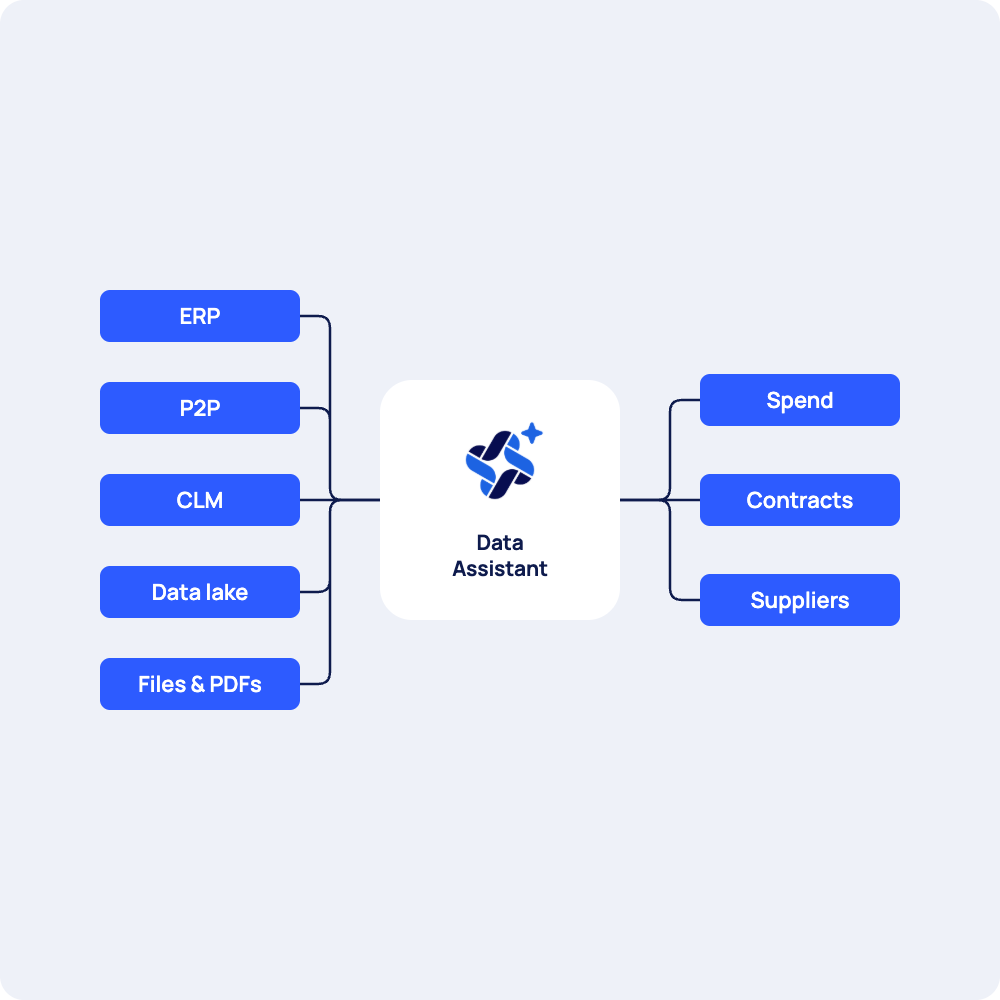









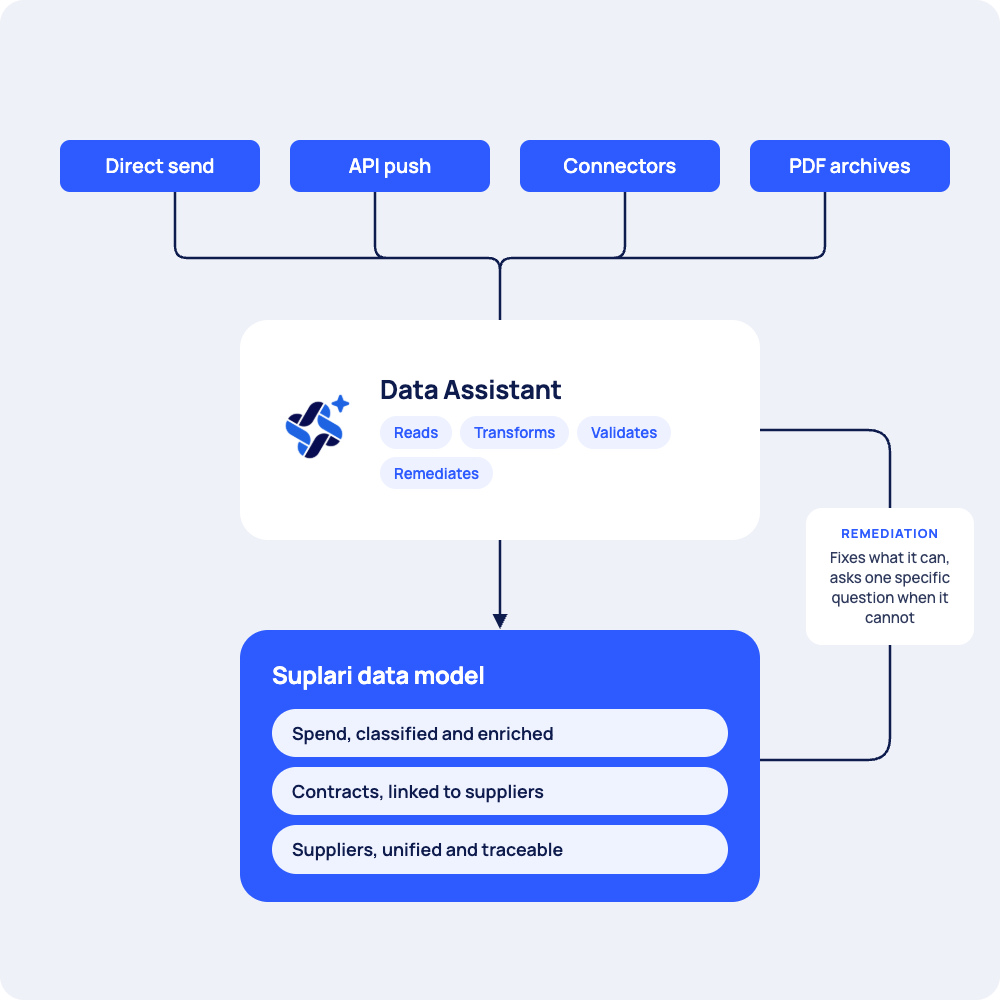
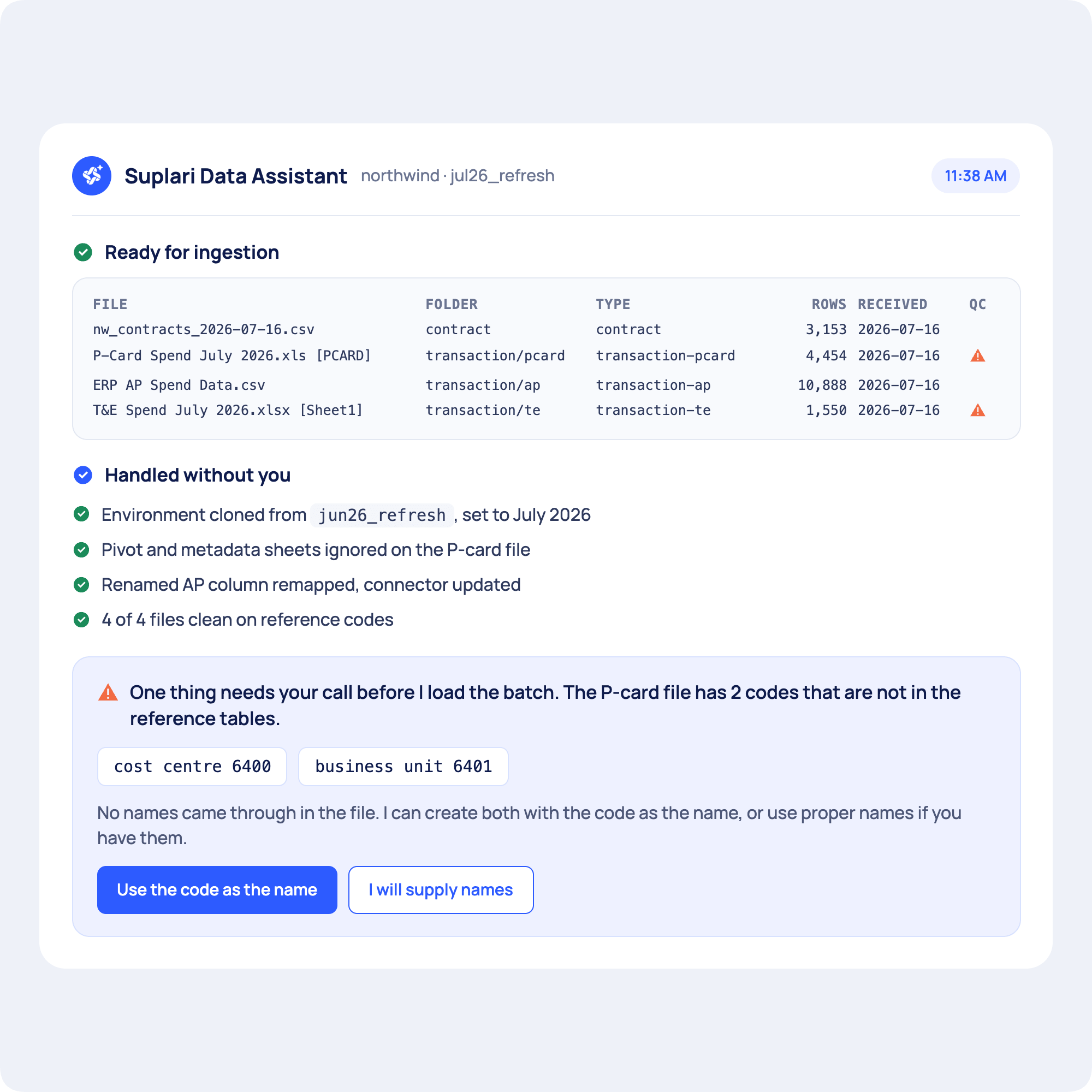












It is the ingestion, transformation, validation and correction of procurement data without manual intervention. Nobody prepares each file or fixes each error. An AI agent recognises incoming data, applies your processing rules, and resolves common faults on its own. It also maintains the connections to your source systems as those systems change.
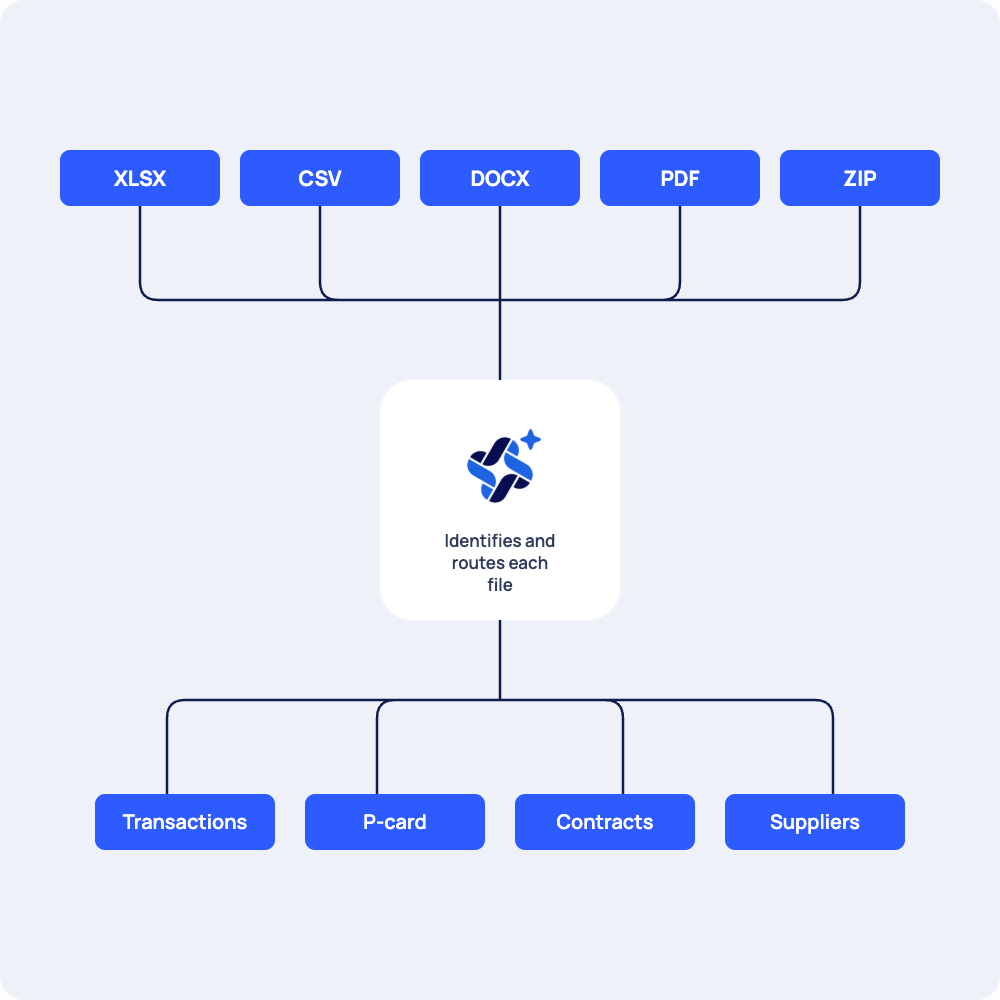
Excel, CSV, Word, PDF and zip archives, including bulk sets of PDFs. Your data can arrive three ways. Send it directly to Suplari, push it through an API integration, or let a Suplari connector pull it from a source system such as an ERP or P2P platform. The Data Assistant identifies what each file contains and works out where the data belongs.
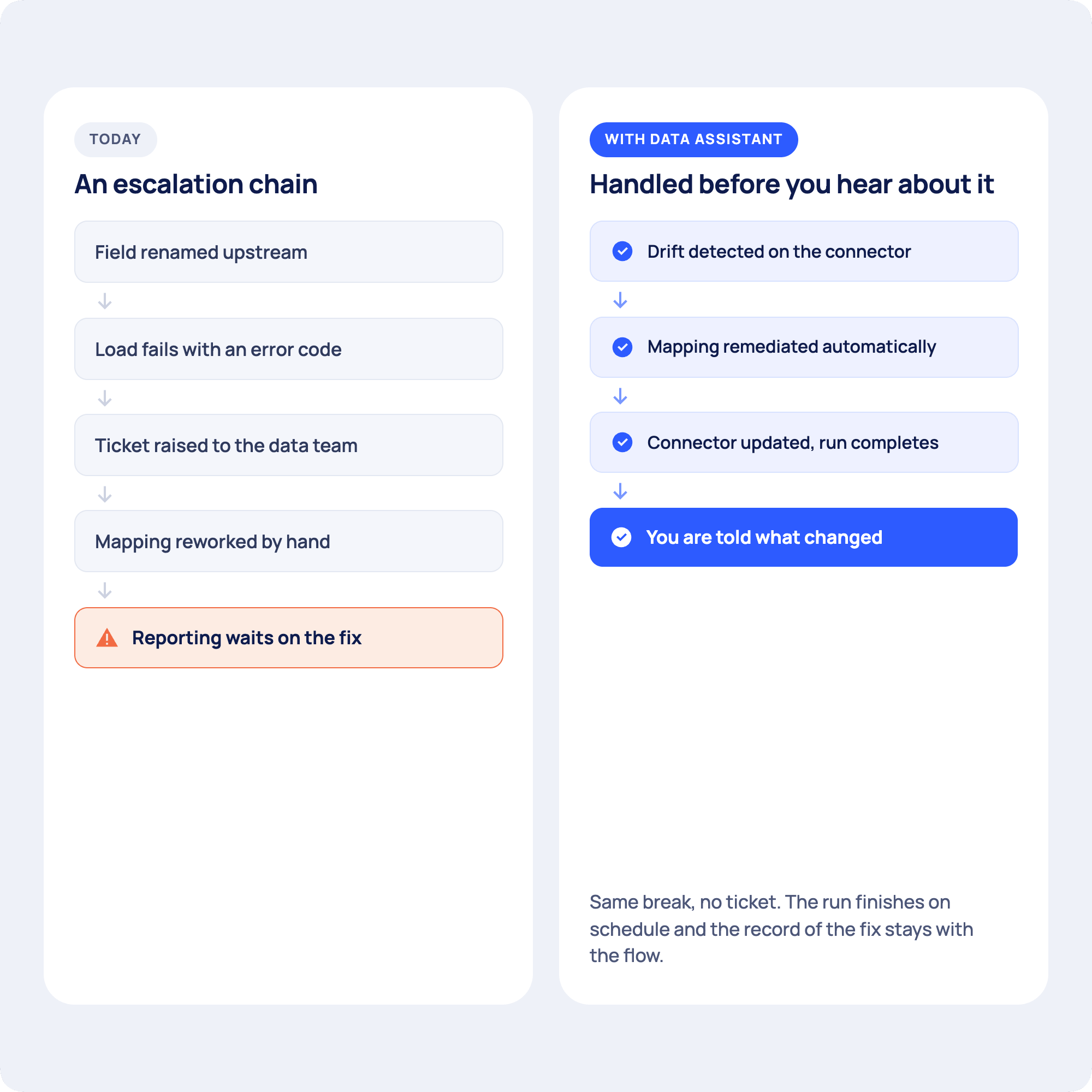
Connectors break when source systems change. A field gets renamed. A new column appears. An export format shifts. The Data Assistant monitors for that drift, remediates what it can, and updates the connector. This used to produce an error, an escalation and a delay before anyone could report on the data.
Only for genuine ambiguity. The Data Assistant resolves what it can, including missing business units, absent account codes, and PO identifiers that fail to link an invoice to its PO. When it cannot determine something, it asks you a specific question through the product, email, Slack or Teams. It then applies your answer to future cycles. Your involvement decreases over time.
A general-purpose model can read a spreadsheet and answer a question about it. It cannot produce data that persists inside a system where enrichment, classification, analytics and filtering are already built. You get a one-off. It is a static answer, or a session you rebuild from scratch next month, usually with engineering help. Suplari Data Assistant delivers your data into a platform where all of that capability is reusable, governed and traceable from the moment the data lands.
The AI Data Platform is where your procurement data lives. It is the unified, supplier-centric foundation, cleansed and enriched and traceable. The Data Assistant is what puts your data there and keeps it correct. It ingests new data, remediates faults, and maintains the connections to your source systems.
Duplicate suppliers are resolved two ways. Deterministic matching uses tax ID, DUNS, and address. Machine learning matching catches the rest, where the same legal entity is spelled differently across systems. Suspected duplicates are surfaced for review rather than merged silently, and every merge is recorded. For currency, Suplari preserves the source currency on each transaction and converts to your reporting currency using configurable FX rates, either point in time or period average, so consolidated spend is comparable across regions without a spreadsheet step.