Spend Classification That Powers Decisions, Not Just Dashboards


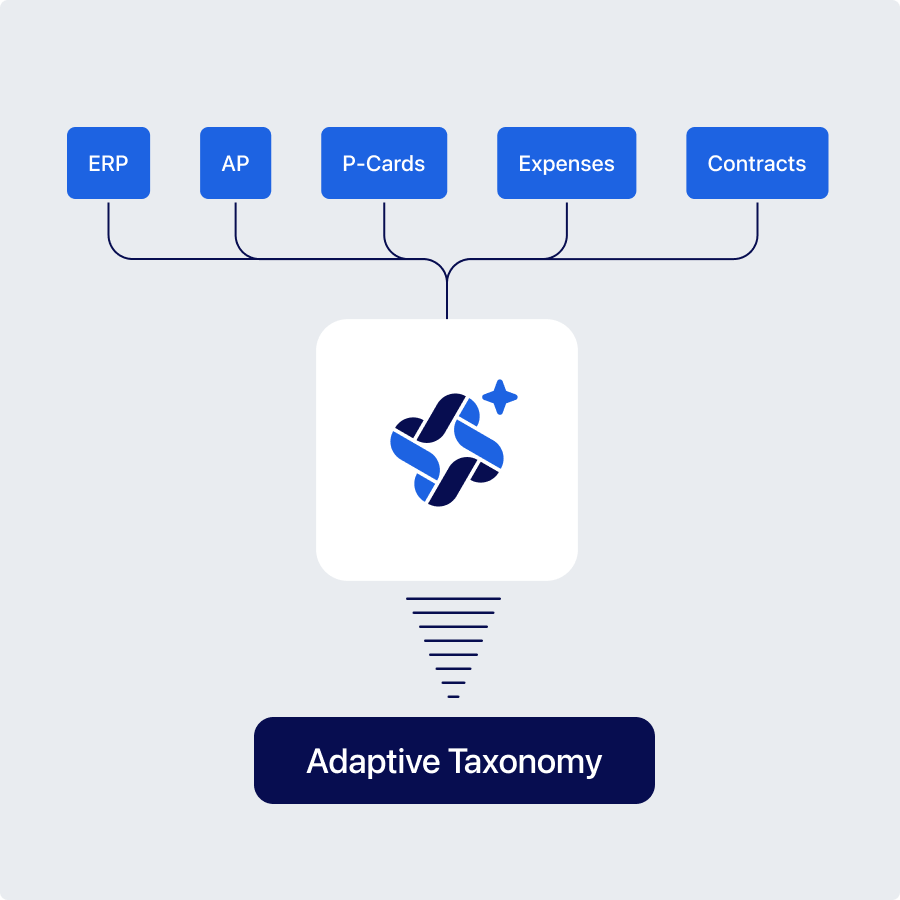



Enrichment typically runs across six layers. Supplier identity resolves the normalized name, tax ID, and DUNS. Corporate hierarchy links global parent and subsidiaries, so every name variant rolls up to one supplier. Category taxonomy classifies what was bought. Commercial context attaches the contract, payment terms, and catalog match. Organizational dimensions add cost center, project, plant, region, and business unit. The sixth layer is any third-party supplier, risk, or ESG data you subscribe to, which becomes a reporting dimension alongside the rest. Every classification exposes the rule, model output, or agent reasoning behind it with a confidence score, and any authorized user can override it in-platform.
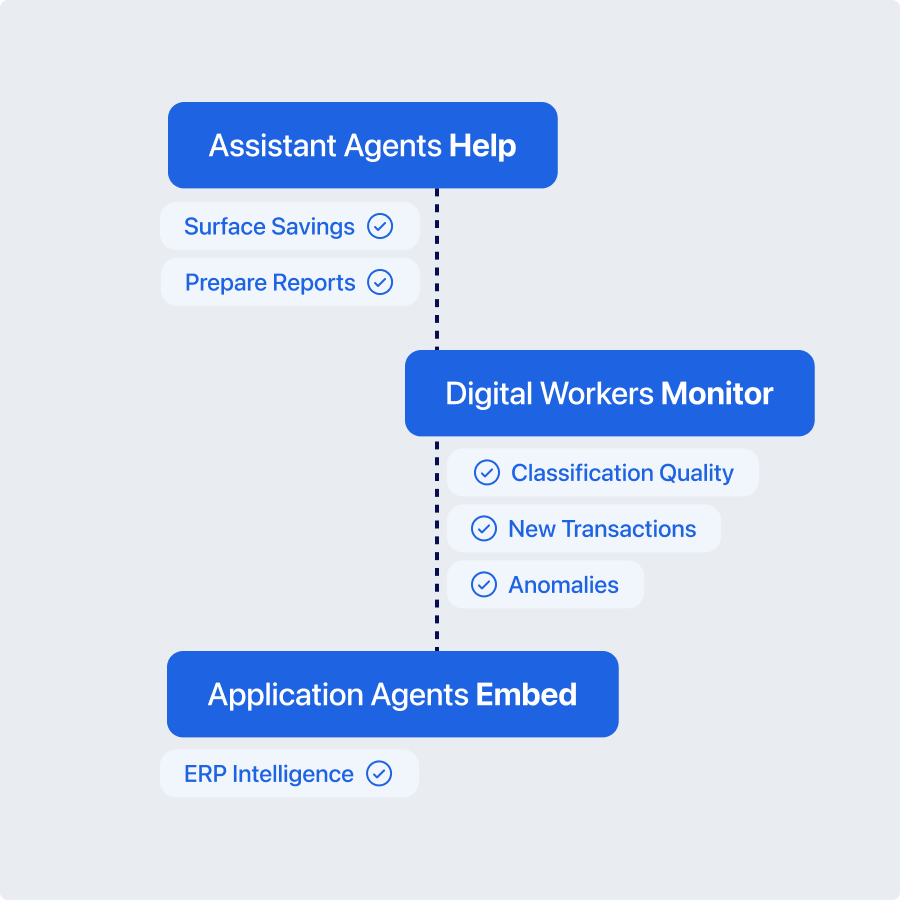
Yes. Application Agents embed classification directly into your ERP workflows so classified data flows where decisions happen. Pre-built integrations available for SAP, Oracle, NetSuite, Coupa, and custom systems.
Our AI is trained on $275B+ in classified procurement spend. Classification confidence scores flag transactions for validation. AI learns from every correction, and customers report classification quality that improves continuously over time.
Rules-based tools require manual maintenance and fail on unstructured data. Suplari uses AI that learns continuously, auto-classifies new transactions, and adapts as your business changes. Classification quality improves with every correction.
Yes. Every customer gets an exclusive taxonomy as deep as their decisions require. Classify by procurement category, general ledger account, cost center, supplier tier, or custom structures simultaneously.
Most organizations achieve full classification with Suplari within 30 days. Initial classification happens in weeks. Your team validates flagged transactions (typically 3-5% of total) where confidence is below threshold. Most validation completes in days.
Suplari uses NLP to read invoice descriptions, matches vendors to categories using machine learning, and applies contextual rules. It classifies every transaction, including P-card, services, and miscellaneous spend that rules-based systems leave in unclassified buckets.

